

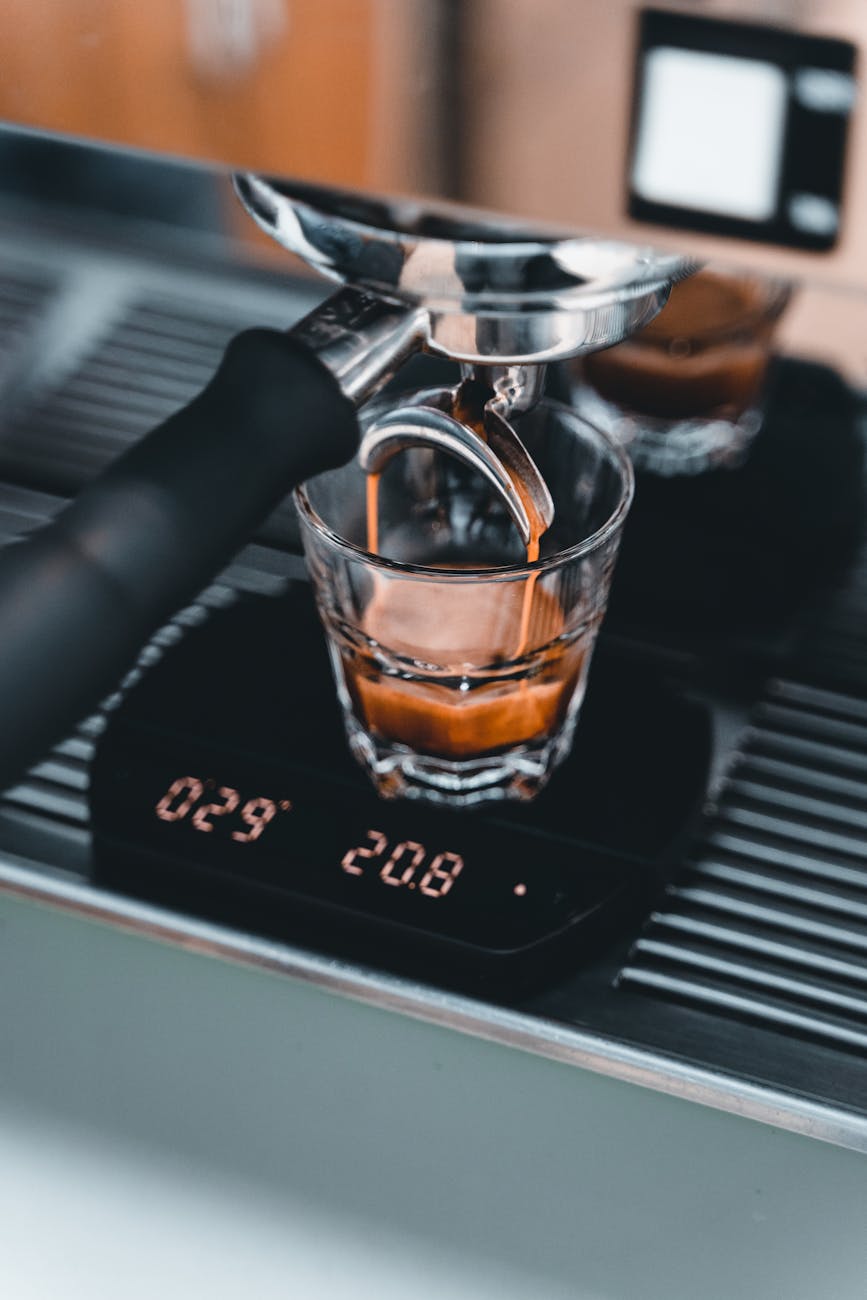
How to use manual pressure to save a shot that runs too fast
There’s a specific moment of dread every barista knows: you lock in the portafilter, start the pump, and watch in horror as a pale, watery stream gushes into the cup. A shot running too fast is a one-way ticket to a disappointing espresso. It’s a clear sign of under-extraction, resulting in a sour, thin, and lifeless drink that lacks the sweetness and body we all crave. While the ideal solution is to adjust your grinder and start again, that’s not always practical. What if you could intervene in real-time? This article will explore the advanced technique of using manual pressure and flow control to salvage a fast-running shot, turning a potential failure into a perfectly drinkable espresso. We’ll delve into why shots run fast and how to use your machine to take back control.
Understanding the problem: Why your shot is running fast
Before you can fix a problem, you must understand its source. An espresso shot that runs too fast is fundamentally a problem of resistance. The finely ground coffee in your portafilter is meant to act as a dense barrier, or “puck,” forcing the hot, pressurized water to work its way through it slowly and evenly. This slow passage is what allows the water enough contact time to dissolve the coffee’s delicious solids, oils, and aromatics. When a shot gushes, it means the water is meeting very little resistance and is passing through the puck too easily. The primary culprits are:
- Coarse grind size: This is the most common reason. If the coffee particles are too large, there are bigger gaps between them, creating an easy path for water to flow through.
- Insufficient dose: If you don’t use enough coffee for your basket size, there will be too much headspace above the puck, and the puck itself will be less dense, offering less resistance.
- Poor puck preparation: Uneven tamping or a failure to distribute the grounds properly can create areas of lower density within the puck. Water, being opportunistic, will exploit these weak spots, a phenomenon known as channeling. This creates tiny rivers inside the puck, causing parts of the coffee to be over-extracted while the majority is left under-extracted.
While perfecting your puck prep and dialing in your grinder is the long-term goal, the ability to manipulate pressure mid-shot is the skill that allows you to react to these issues on the fly.
The technique: Applying manual pressure to slow the flow
Once you’ve identified a shot is running too fast, you can use your machine’s controls to manually introduce the resistance that the coffee puck is failing to provide. The goal is to reduce the rate at which water is flowing into the grouphead, thereby forcing it to spend more time in contact with the coffee. This technique, often called pressure or flow profiling, varies slightly depending on your equipment.
For machines equipped with a flow control paddle (common on E61 group heads), the process is quite direct. As you see the shot begin to gush, you can gradually close the paddle. This physically narrows the opening that water passes through, reducing the flow rate. You don’t want to choke the machine completely, but rather ease the paddle back until you see the flow from the portafilter slow to a more controlled, syrupy stream. You are essentially creating a new, lower pressure at the puck, which slows down the extraction process.
On a manual lever machine, you have the most direct tactile control. If you feel the lever offering very little resistance as you pull the shot, it’s a clear sign the grind is too coarse. To save it, you can simply ease up on the pressure you are applying to the lever. By pulling more gently, you are directly reducing the pressure being exerted on the puck, which will slow the flow rate and give the water more time to extract properly.
Reading the signs and reacting in real-time
Mastering manual intervention is about developing a feel for the extraction and learning to recognize the warning signs of a fast shot before it’s too late. It’s a proactive dance between observation and reaction. You need to be watching the shot develop from the very first drop.
The key indicators appear very early in the extraction process. First, pay attention to the time to first drip. If you see coffee appearing from the spout in under 4-5 seconds, it’s a major red flag that your shot is on a fast track. Next, observe the stream itself. A well-extracting shot should start as slow, viscous drips that coalesce into a steady, thin stream often referred to as a “mouse tail.” If you instead see a wide, gushing flow that looks thin and pale almost immediately, it’s time to act. This early “blonding” is a tell-tale sign that the water has already extracted the easiest compounds and is now just flushing through the puck without extracting much else.
Here is a simple breakdown of cues and the appropriate manual response:
| Visual or audio cue | What it means | Manual pressure action |
|---|---|---|
| First drops appear in under 5 seconds | Low puck resistance, likely coarse grind. | Immediately begin to reduce flow/pressure. |
| Flow is watery and pale from the start | Severe channeling or very coarse grind. | Significantly reduce flow to try and build some pressure. |
| Shot blondes very early (before 15 seconds) | Extraction is happening too quickly. | Gradually reduce pressure to extend the contact time. |
| Sudden spurts from a bottomless portafilter | A channel has just opened up in the puck. | Quickly decrease the flow to lower pressure and help the puck “heal”. |
By learning to recognize these signs, you can shift from simply starting and stopping a shot to actively guiding it toward a better result.
When to save a shot and when to start over
It’s important to recognize that manual pressure control is a powerful tool, not a magic wand. Not every shot is salvageable, and knowing when to cut your losses is just as important as knowing how to intervene. The decision to save a shot or dump it depends on the severity of the problem and how early you catch it.
You should attempt to save the shot if the extraction starts just a bit too quickly. For example, if your target is a 30-second extraction but you hit your yield at 20 seconds, slowing the flow for the final 10 seconds can add body and balance that would otherwise be missing. The resulting espresso may not be a god shot, but it can be very pleasant, especially if it’s destined for a milk-based drink like a latte or cappuccino. This technique is for course correction, not for resurrecting a complete disaster.
Conversely, it’s best to start over when you witness catastrophic failure from the beginning. If the shot gushes out like an open faucet, with massive channeling and a watery appearance from second one, no amount of pressure manipulation will fix it. The puck is fundamentally flawed. Trying to save such a shot will likely result in a cup that is both sour (from overall under-extraction) and bitter (from the localized over-extraction in the channels). In these cases, it’s more efficient to accept the loss, analyze what went wrong with your puck prep or grind, and dial in properly for the next attempt.
Conclusion
Seeing an espresso shot run too fast can be disheartening, but it doesn’t always have to end in a sink shot. For baristas with the right equipment, manual pressure and flow control offer a dynamic way to intervene and guide the extraction in real-time. By understanding that a fast shot is a symptom of low resistance, you can use your machine to manually add that resistance back, slowing the flow and increasing water contact time. Learning to read the early visual cues—like a quick first drip or a pale, watery stream—is critical to reacting effectively. While this technique cannot fix a fundamentally flawed puck, it can turn a slightly-off shot into something truly enjoyable. Ultimately, mastering this skill elevates your craft, transforming you from a machine operator into a barista who is truly in control of every variable of the brew.
 No products in the cart.