

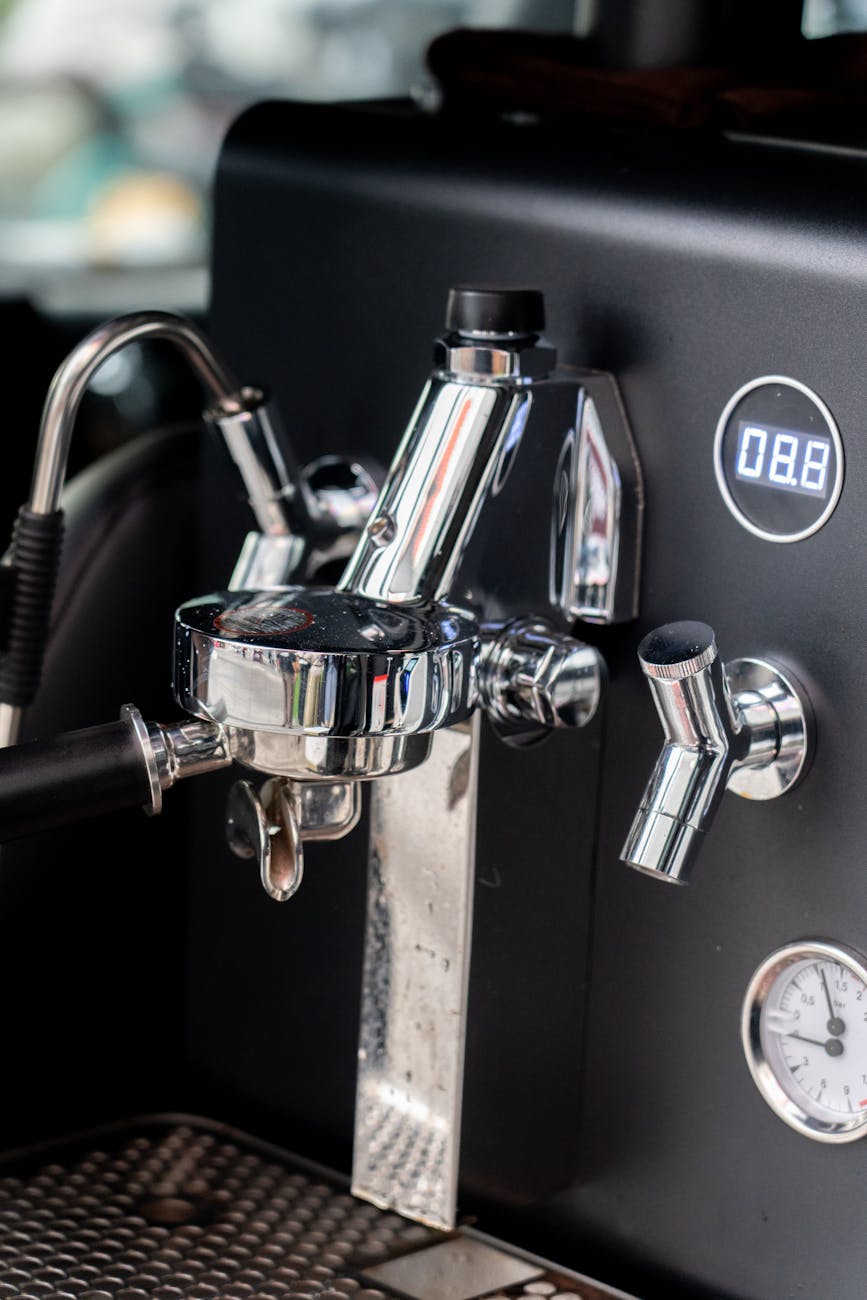
Mastering your Profitec Go: A guide to workflow analysis with a bottomless portafilter
The Profitec Go has earned its place in the homes of coffee enthusiasts as a powerful and compact single-boiler espresso machine. It offers precise temperature control and the power needed for fantastic espresso. However, to truly unlock its potential, you need to understand what’s happening during extraction. This is where a bottomless portafilter becomes more than just an aesthetic upgrade; it’s a critical diagnostic tool. This guide will walk you through how to use a bottomless portafilter to analyze your workflow, identify problems, and consistently pull delicious, balanced shots of espresso. We’ll move beyond the beautiful visuals and delve into the practical science of diagnosing your puck prep, dialing in your grinder, and perfecting your technique.
What is a bottomless portafilter and why you need one
Before diving into analysis, it’s essential to understand the tool itself. A traditional portafilter has a metal base with one or two spouts that guide the espresso into your cup. A bottomless portafilter, as the name suggests, has the bottom portion completely removed, exposing the entire filter basket. This simple modification provides an unfiltered, real-time view of the extraction process as water is forced through the coffee puck.
The primary benefit is immediate visual feedback. With a spouted portafilter, any errors in your preparation are hidden. The spouts collect and merge the streams of coffee, masking issues like channeling. With a bottomless portafilter, there’s nowhere to hide. You can see precisely how evenly the water is flowing through the coffee bed. This allows you to diagnose issues with:
- Distribution: Are there areas where the water is not flowing, or flowing too quickly?
- Tamping: Is your tamp level, or is the water favoring one side of the basket?
- Grind size: Is the flow too fast and watery, or is it choking the machine?
Ultimately, this tool transforms your espresso making from a process of guesswork into one of informed adjustments, empowering you to improve with every shot.
Using visual cues to dial in your grinder
The first and most fundamental variable you’ll adjust is your grind size, and the bottomless portafilter is your best guide. The initial seconds of the shot provide a wealth of information. After you engage the pump on your Profitec Go, watch the bottom of the basket closely. An ideal extraction should begin with small beads of dark espresso forming evenly across the basket’s surface. These beads should then coalesce toward the center, forming a single, stable, syrupy stream that flows for the duration of the shot.
Deviations from this ideal tell a clear story about your grind setting. If the coffee starts gushing out almost immediately in a thin, watery, and pale stream, your grind is too coarse. The water is passing through the coffee grounds with little resistance, leading to an under-extracted and sour shot. Conversely, if the machine struggles and only a few dark, slow drips emerge, your grind is too fine. This “choking” of the machine means the water cannot pass through the overly dense puck, resulting in an over-extracted and bitter shot. Your goal is to find the sweet spot where the flow is steady and controlled, creating that beautiful, centered cone of espresso.
Perfecting puck prep to eliminate channeling
Once your grind size is in the right ballpark, the focus shifts to puck preparation. This is where a bottomless portafilter truly shines. The most common and frustrating issue for any barista is channeling. This occurs when water finds a path of least resistance through the coffee puck, leading to uneven extraction. Certain parts of the coffee are over-extracted while others are under-extracted, all in the same shot.
Visually, channeling manifests as fast-moving, light-colored streams or aggressive jets spurting from the basket. On the Profitec Go, with its powerful vibratory pump, meticulous puck prep is essential to avoid this. Here’s how to diagnose and fix it:
- Clumped grounds: If you see channeling despite a good grind setting, the culprit is often clumpy coffee grounds. Use a Weiss Distribution Technique (WDT) tool, which is a set of fine needles, to break up any clumps and evenly distribute the grounds in your portafilter.
- Uneven tamping: If spurts consistently appear on one side of the basket, it’s a strong indicator of an unlevel tamp. Ensure you are applying firm, even pressure and that your tamper is perfectly flat relative to the basket rim. A self-leveling tamper can be a great investment.
- Dose level: Overfilling the basket can cause the puck to fracture when the portafilter is locked in, creating instant channels. Ensure you have a small amount of headroom between the top of the coffee and the shower screen.
By observing the extraction and addressing these variables, you can create a uniform and resilient coffee puck that promotes a balanced and delicious shot.
Putting it all together: A diagnostic table
Observing the shot is one thing; knowing how to react is another. As you pull shots on your Profitec Go, use this table to interpret what you see through your bottomless portafilter and decide what adjustment to make. Remember to only change one variable at a time (e.g., grind, dose, or prep technique) to accurately assess its impact.
| Visual sign | Likely cause | Recommended solution |
|---|---|---|
| Coffee gushes out quickly; shot is pale and watery. | Grind is too coarse. | Adjust your grinder to a finer setting. |
| Machine chokes; only a few dark drips emerge. | Grind is too fine. | Adjust your grinder to a coarser setting. |
| Aggressive spurts or jets from random spots in the basket. | Channeling due to poor distribution (clumps). | Use a WDT tool to break up clumps and evenly distribute grounds. |
| Channeling consistently from one side of the basket. | Uneven or unlevel tamping. | Focus on a perfectly level tamp. Consider a self-leveling tamper. |
| Extraction starts around the edges first (“donut extraction”). | Center of the puck is too dense, or you are overdosing the basket. | Reduce your dose slightly and ensure grounds are evenly distributed away from the center before tamping. |
| Bald spots appear on the basket before flow begins. | Poor distribution, creating air pockets in the puck. | Improve your WDT technique and give the portafilter a gentle tap on the counter to settle the grounds before tamping. |
Conclusion
A bottomless portafilter is far more than a tool for capturing beautiful videos. For the owner of a precise machine like the Profitec Go, it is an indispensable window into the heart of the extraction process. It provides the instant, unfiltered feedback needed to move beyond recipes and truly understand the craft of espresso. By learning to interpret the visual cues of your extraction, you can effectively diagnose issues with your grind setting, perfect your puck preparation, and systematically eliminate channeling. This transforms your workflow from a game of chance into a repeatable, data-driven skill. Embrace this powerful tool, and you’ll not only solve problems but also deepen your appreciation for the complex art of making exceptional espresso at home.
 No products in the cart.