

Keep your brew pure: A guide to cleaning manual espresso components
A manual espresso machine is an investment in quality coffee, but that investment requires care to deliver its full potential. The secret to a consistently delicious, rich, and aromatic shot of espresso isn’t just in the beans or the grind; it’s in the cleanliness of your equipment. Over time, coffee oils, fine grounds, and mineral deposits build up on every surface, turning rancid and imparting bitter, undesirable flavors into your cup. This guide will walk you through the essential best practices for cleaning and drying your manual espresso components. We will cover everything from the quick daily rinse to the deeper weekly maintenance, ensuring your machine remains in peak condition and every shot you pull is as perfect as the last.
Why a clean machine is non-negotiable
It’s easy to overlook the microscopic residue left behind after pulling a shot, but this buildup is the primary enemy of great espresso. Coffee beans are packed with oils, which are essential for creating a rich crema and a full-bodied flavor profile. However, when these oils are left to sit on machine components like the portafilter, basket, and shower screen, they oxidize and turn rancid. This rancidity directly translates into a bitter, stale, or even burnt taste in your coffee, no matter how fresh your beans are.
Beyond taste, neglecting cleanliness has a direct impact on your machine’s performance and longevity. Fine coffee grounds can clog the tiny holes in your filter basket and shower screen, leading to channeling and uneven extraction. In a worst-case scenario, this buildup can obstruct water flow within the group head, causing pressure issues and potentially damaging internal components. Think of regular cleaning not as a chore, but as essential maintenance that protects both your palate and your valuable equipment.
Your daily cleaning ritual
Consistency is key. Integrating a few simple steps into your daily coffee-making routine takes less than a minute but makes a world of difference. This daily practice is focused on preventing the initial buildup of oils and grounds before they have a chance to set.
- Purge the group head: Before locking in your portafilter and after you’ve pulled your shot, run the group head for a few seconds. This flushes out any loose grounds from the previous shot and helps stabilize the temperature.
- Immediate puck disposal: Knock out the used coffee puck from your portafilter as soon as you’re done. A wet, warm puck is a breeding ground for stale flavors and is much harder to clean once it dries and hardens.
- Rinse and wipe: After knocking out the puck, immediately rinse the portafilter and the basket under hot water from the group head or your tap. Use a dedicated cloth to wipe them clean, ensuring no visible grounds or oils remain.
- Brush the shower screen: Use a stiff-bristled group head brush to gently scrub the shower screen and the surrounding gasket. This dislodges any grounds that were forced up during the extraction process.
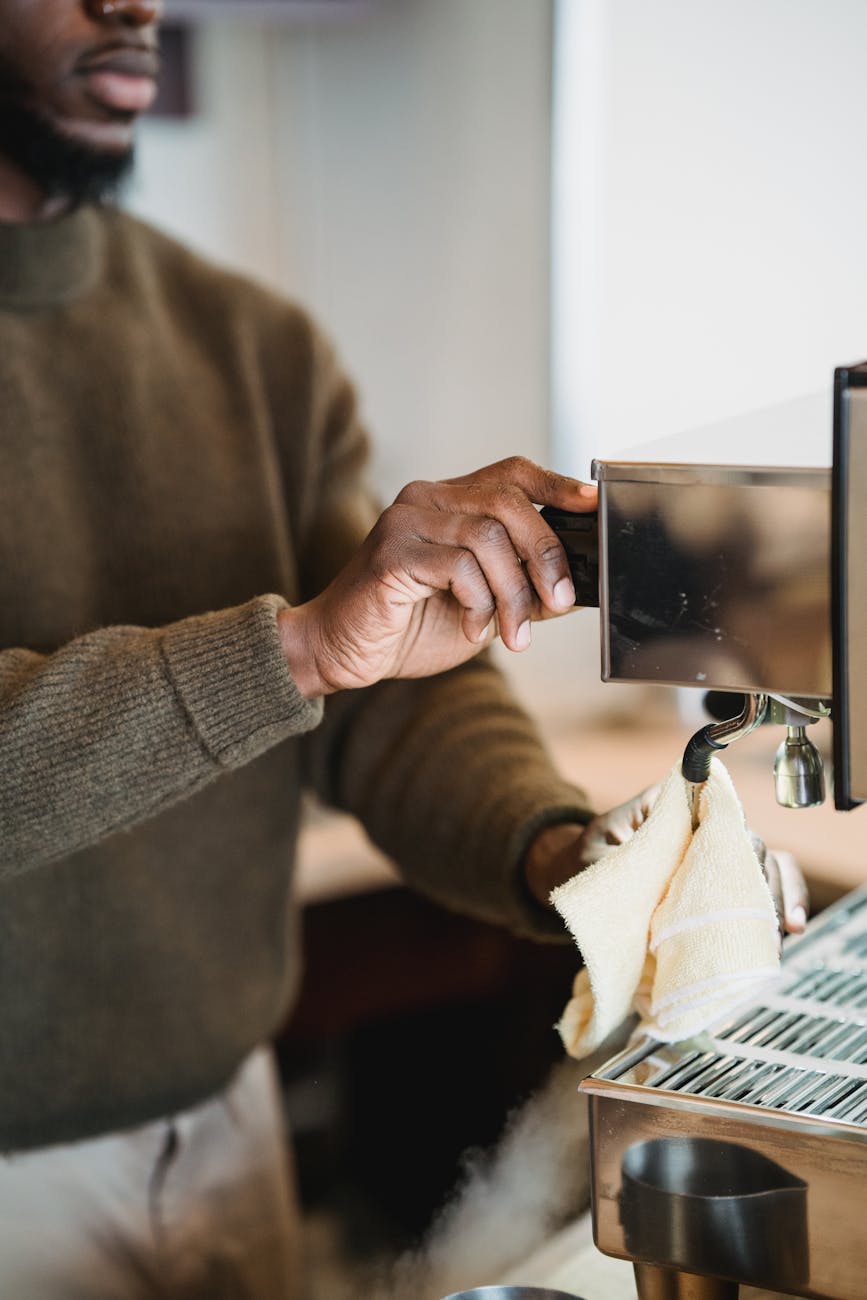
- Clean the steam wand: If you steam milk, wipe the wand with a damp cloth immediately after use. Then, point it towards the drip tray and purge it for a second or two to clear any milk from inside the tip. Dried milk is difficult to remove and can harbor bacteria.
The weekly deep clean for peak performance
While daily rinsing is great for surface-level cleaning, a more thorough weekly session is necessary to break down the stubborn, oily residue that water alone can’t remove. This involves using a dedicated espresso machine detergent designed to dissolve coffee oils.
The most effective weekly task is backflushing with a detergent. (Note: Only perform this on machines designed for backflushing, typically those with a 3-way solenoid valve. Check your machine’s manual if you are unsure.) To do this, you’ll replace your regular filter basket with a “blind” basket (one with no holes). Add a small amount of espresso machine cleaner, lock the portafilter in, and run the pump for about 10 seconds, then stop. The machine will release pressure back through the group head, flushing the detergent through the system and cleaning the internal pathways. Repeat this cycle several times, followed by several more cycles with just plain water to rinse everything thoroughly.
In addition to backflushing, soak your metal components. Remove the shower screen (if easily removable on your model) and place it, along with your filter baskets and the metal part of your portafilter, in a hot water and detergent solution for about 30 minutes. Never submerge a wooden or plastic handle in the solution. After soaking, use a brush to scrub away any remaining residue and rinse all components thoroughly with fresh water.
| Component | Frequency | Method |
|---|---|---|
| Group Head | Daily | Purge with hot water before and after each shot. |
| Portafilter & Basket | Daily | Rinse with hot water and wipe with a cloth after each use. |
| Shower Screen & Gasket | Daily | Wipe and scrub with a group head brush. |
| Steam Wand | Daily | Wipe and purge after each use. |
| Group Head (Backflush) | Weekly | Backflush with espresso machine detergent, followed by a water rinse. |
| Portafilter, Basket, Shower Screen | Weekly | Soak in a detergent solution for 30 minutes, then scrub and rinse. |
The crucial final step: Proper drying and reassembly
Cleaning your components is only half the battle; drying them correctly is just as important. Trapped moisture is a recipe for problems. It can lead to the development of unpleasant musty odors, create a slimy texture on surfaces, and even encourage mineral spotting or corrosion over time. Simply rinsing and reassembling your machine is a common mistake that undermines all your cleaning efforts.
After a thorough rinse, use a clean, dry, and lint-free microfiber cloth to wipe down every component. Pay special attention to the inside of the portafilter and the nooks and crannies of the shower screen. For a truly complete dry, lay the parts out on a clean towel or a drying rack and allow them to air-dry completely for an hour or so. Never lock a wet portafilter back into a warm group head, as this creates a humid, sealed environment perfect for bacterial growth. Ensuring everything is bone-dry before reassembly preserves the integrity of your machine and the purity of your next brew.
Conclusion
Maintaining a manual espresso machine is an act of care that directly rewards you with superior coffee. As we’ve discussed, a comprehensive cleaning routine is built on two pillars: the quick, preventative daily wipe-down and the more intensive weekly deep clean. The daily ritual prevents the immediate buildup of grounds and oils, while the weekly backflushing and soaking dissolve the stubborn residue that inevitably accumulates. Finally, never underestimate the importance of proper drying, as it prevents moisture-related issues and ensures a truly clean start for your next session. By embracing these best practices, you are not just cleaning a machine; you are respecting the craft of espresso and guaranteeing that every single cup is as flavorful, aromatic, and delicious as it was meant to be.
 No products in the cart.