

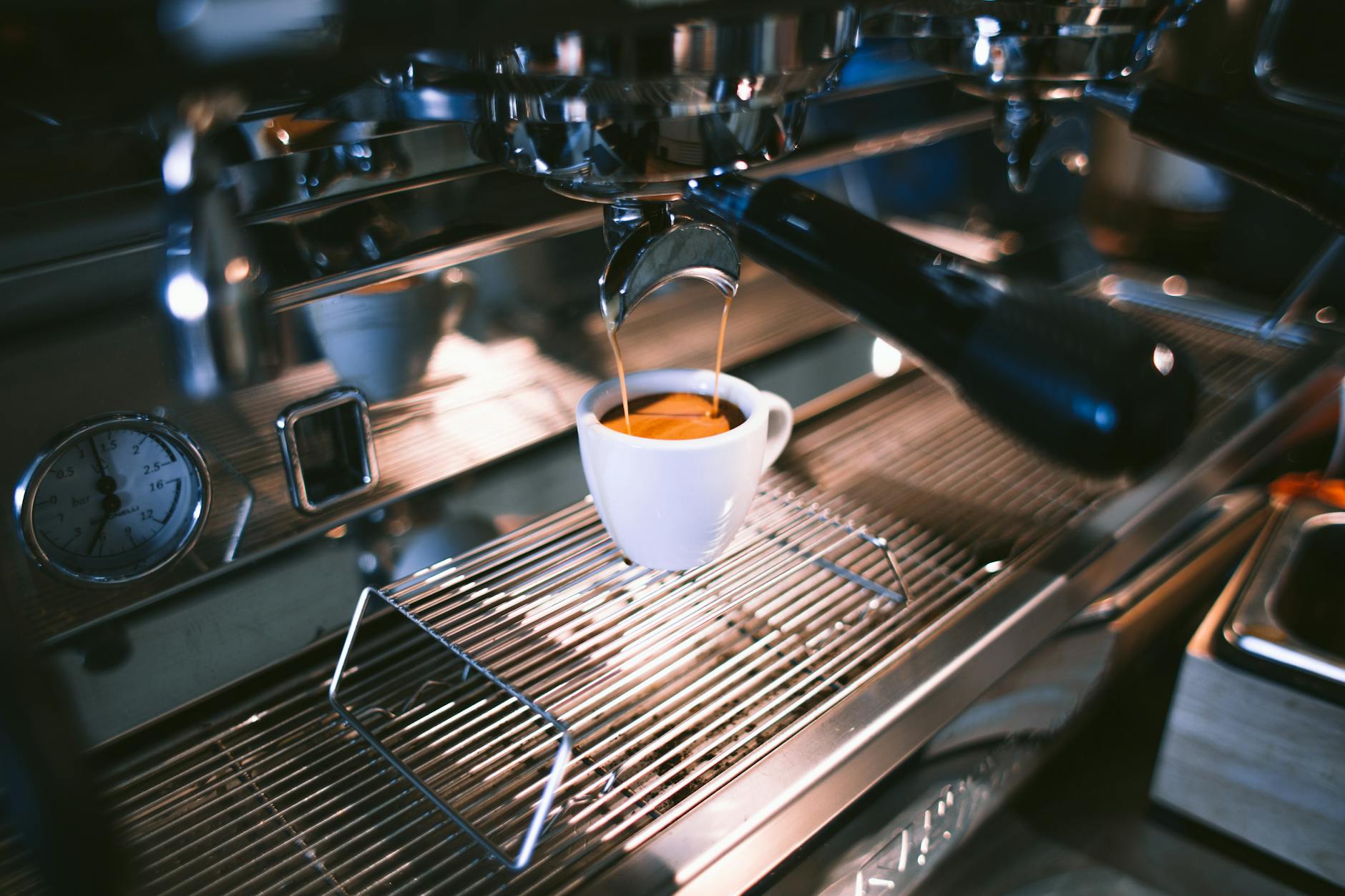
The graceful arc of a lever espresso machine in motion is a sight to behold for any coffee lover. It represents a return to the manual art of coffee extraction, where the barista’s touch directly influences the final cup. But beyond the aesthetics and the satisfying tactile feedback lies a unique physical principle that sets lever machines apart: the declining pressure profile. This natural pressure drop during a shot is not a flaw but a defining feature, responsible for the smooth, rich, and often sweeter espresso that these machines are famous for. In this article, we will delve into the physics behind this phenomenon, exploring how simple mechanics create a complex and highly desirable extraction curve that modern pump machines often try to replicate.
The heart of the machine: The spring and the piston
To understand the declining pressure, we must first look at the core mechanism of a spring-lever espresso machine. When a barista pulls the lever down, they are not pushing water through the coffee. Instead, they are using mechanical leverage to compress a powerful, coiled spring located inside the group head’s cylinder. This action also lifts a piston, allowing hot water from the boiler to fill the chamber above the coffee puck. This initial, low-pressure phase is known as pre-infusion, where the grounds are gently saturated.
The real magic begins when the barista releases the lever. The compressed spring begins to expand, driving the piston down. This is what forces the water through the coffee grounds to extract the espresso. The entire pressure profile of the shot is dictated by the force exerted by this spring. This is where a fundamental principle of physics comes into play: Hooke’s Law. In simple terms, Hooke’s Law states that the force a spring exerts is directly proportional to the distance it has been compressed. The more you compress it, the harder it pushes back. Consequently, as the spring expands and returns to its resting state, the force it exerts gradually diminishes.
From force to pressure: The journey through the puck
The diminishing force of the spring is only one half of the equation. This force needs to be translated into the hydraulic pressure that we measure in bars. The relationship is defined by the formula Pressure = Force / Area. Here, the ‘Force’ is supplied by the expanding spring, and the ‘Area’ is the surface of the piston head pushing down on the column of water.
At the very beginning of the shot, when the lever is released, the spring is at its maximum compression, exerting its peak force. This translates to the highest pressure of the entire extraction, often peaking between 9 and 11 bars. As the piston moves down and the spring expands, its force decreases second by second. This directly causes the pressure on the water, and therefore on the coffee puck, to decline in a smooth, continuous curve. A shot might start at 10 bars but gracefully taper off to 5 or 6 bars by the time it is complete. This mechanical simplicity produces an elegant and dynamic extraction process that is difficult to achieve with a standard electric pump, which typically delivers a flat, constant pressure.
The shot in motion: Mapping the pressure curve
If we were to plot the pressure of a lever shot over time, it would look very different from the flat line of a typical pump machine. The lever profile is a curve with distinct phases, each contributing to the final flavor.
- Pre-infusion: This phase occurs at a very low, static pressure (often 1-3 bars, depending on the machine’s line pressure) as the chamber fills with water. This gently saturates the puck, reducing the risk of channeling when the full pressure is applied.
- Peak pressure: The moment the lever is released, the pressure ramps up to its maximum point. This aggressive initial phase is excellent for extracting the rich oils and solids that create espresso’s signature body and crema.
- The decline: This is the longest phase of the shot, where the pressure gradually falls from its peak. This gentle finish is crucial for the flavor profile.
To make this tangible, let’s look at a typical shot’s progression:
| Time (seconds) | Pressure (bars) | Extraction phase |
|---|---|---|
| 0-8 | 2.0 | Pre-infusion (lever down) |
| 9 | 9.5 | Peak pressure (lever released) |
| 15 | 8.0 | Mid-shot decline |
| 25 | 6.5 | Late-shot decline |
| 35 | 5.0 | End of shot (tail) |
The taste of physics: How declining pressure impacts flavor
So, why is this declining pressure profile so sought-after? The answer lies in how different coffee compounds are extracted. The initial high pressure is very effective at dissolving the desirable fats, oils, and sugars that give espresso its viscosity and sweetness. However, maintaining that high pressure throughout the entire shot can lead to problems. As the puck degrades and its structure breaks down, constant high pressure can easily force water through weak spots, creating channels. This channeling leads to over-extraction of bitter and astringent compounds from some parts of the puck while under-extracting others.
The declining pressure of a lever machine naturally mitigates this. As the puck becomes more fragile towards the end of the extraction, the pressure is also decreasing. This gentler finish allows for a full extraction while significantly reducing the risk of channeling and the harsh flavors that come with it. The result is often a cup that is remarkably balanced, with a thick, syrupy body from the initial phase and a clean, sweet, and complex finish from the declining phase, free from excessive bitterness. It is a perfect example of how simple physics can lead to a superior sensory experience.
In essence, the iconic declining pressure profile of a lever espresso machine is a direct result of the physics of a coiled spring. Governed by Hooke’s Law, the spring exerts its maximum force when fully compressed and gradually less force as it expands, creating a pressure curve that peaks early and then gently tapers off. This is not a limitation but rather an elegant, built-in feature that profoundly impacts the flavor in the cup. By starting strong to build body and finishing gently to avoid bitterness, the lever machine’s natural pressure profile allows for a balanced and forgiving extraction. It masterfully extracts the best elements from the coffee grounds, producing the uniquely smooth, rich, and nuanced shots that have made these manual machines revered by espresso purists.
 No products in the cart.