

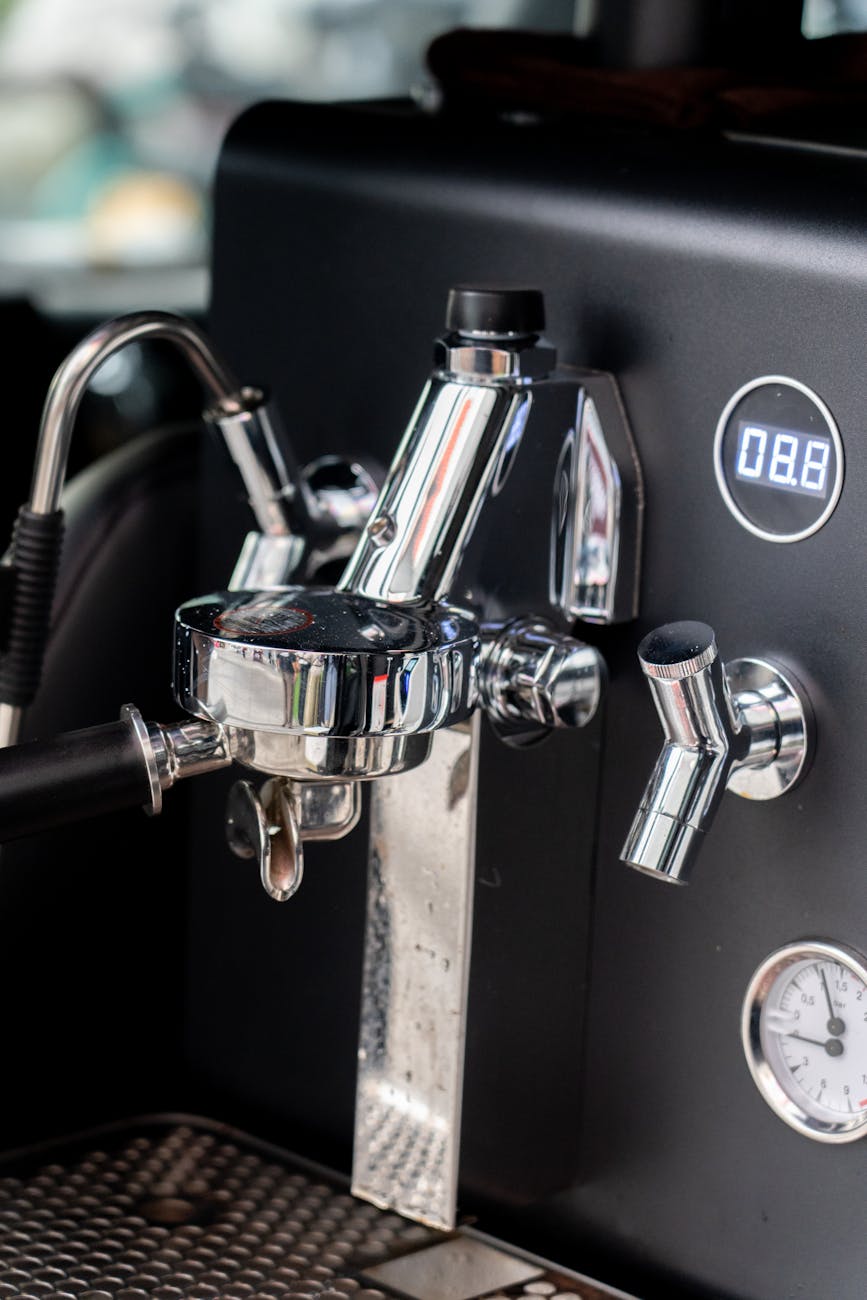
Lever espresso machines offer a tactile and engaging brewing experience, giving the barista unparalleled control over the extraction process. Among the many variables you can manipulate, pre-infusion stands out as one of the most critical for unlocking a coffee’s full potential. It’s the gentle introduction of water to the coffee puck before the full pressure of extraction begins. Mastering this initial phase is the key to moving beyond good espresso to truly exceptional shots. This article will explore the art and science of managing pre-infusion time on lever machines, explaining how this single step can prevent channeling, enhance flavor clarity, and help you achieve a consistently balanced and delicious extraction every time you pull a shot.
What is pre-infusion and why does it matter?
At its core, pre-infusion is the low-pressure phase at the very beginning of an espresso shot. During this stage, water gently soaks the dry, compressed puck of coffee grounds. Think of it as preparing the coffee for the intense pressure to come. Unlike many semi-automatic machines that have a fixed pre-infusion setting, lever machines provide direct, hands-on control over this crucial step.
But why is this gentle soak so important? Its primary purpose is to ensure even saturation. When high-pressure water hits a dry puck, it can fracture the surface and create tiny cracks, or channels. Water, being lazy, will always follow the path of least resistance. This means it will rush through these channels, over-extracting the coffee it touches and completely ignoring other parts of the puck. The result is a shot that is simultaneously bitter and sour—a classic sign of channeling.
Proper pre-infusion prevents this by:
- Allowing the coffee grounds to swell and settle, creating a more stable and uniform puck.
- Gently releasing trapped CO2 from freshly roasted beans, which could otherwise disrupt the puck’s integrity.
- Ensuring the entire bed of coffee is wet, promoting a uniform and even extraction when full pressure is applied.
This leads to a more balanced cup with greater sweetness, clarity, and a richer body. It’s the foundation upon which a great lever shot is built.
The mechanics of pre-infusion in different lever machines
Not all lever machines handle pre-infusion the same way. The level of control you have depends on whether you are using a spring-piston or a direct lever machine. Understanding your machine’s mechanics is the first step toward mastering the technique.
Spring-piston levers, like a Londinium or a Profitec Pro 800, use a large, coiled spring to generate extraction pressure. To start pre-infusion, you pull the lever down (or up, depending on the design). This lifts a piston, allowing water from the boiler or a connected water line to enter the brew chamber and saturate the coffee. The pressure of this pre-infusion is determined by the boiler’s pressure or the line pressure if plumbed in. You control the duration by deciding how long to hold the lever in this position before releasing it to let the spring take over. The process is consistent and repeatable, but the pressure is largely passive.
Direct (or manual) levers, such as a La Pavoni, a Flair, or an Olympia Cremina, give you complete control. You lift the lever to fill the chamber with water and then you are in charge of everything that follows. By applying a small amount of downward pressure on the lever, you can manually control both the pressure and the duration of the pre-infusion. This provides immense tactile feedback; you can feel the puck resisting and then saturating. This direct connection allows for on-the-fly adjustments but requires more practice and skill to achieve consistency.
Dialing in your pre-infusion time
There is no single “perfect” pre-infusion time. The ideal duration depends heavily on the coffee itself—its origin, processing, and most importantly, its roast level. The goal is to fully saturate the puck without starting the main extraction too early. A great visual cue, especially with a bottomless portafilter, is to watch for the first few drips of espresso to appear. Many baristas end their pre-infusion at this point.
However, different roasts behave differently due to their density and solubility:
- Light roasts: These beans are very dense and less soluble. They need a longer pre-infusion (often 12-20 seconds) to fully saturate. Without enough time, you risk a sour, under-extracted shot because the water won’t have penetrated the grounds effectively before the high-pressure pull begins.
- Medium roasts: This is a flexible middle ground. A pre-infusion time of around 8-12 seconds is a fantastic starting point. You can adjust this based on taste, aiming for a balance of sweetness, acidity, and body.
- Dark roasts: These beans are more brittle, porous, and highly soluble. They require a much shorter pre-infusion (typically 4-8 seconds). Too long, and you risk extracting bitter, ashy flavors before the shot has even truly begun.
Here is a table to use as a starting point for your experiments:
| Roast level | Recommended starting pre-infusion time | Tasting notes to look for |
|---|---|---|
| Light roast | 12 – 20 seconds | Goal: Bright acidity, floral/fruity notes, sweetness. Too short: Sour, grassy. |
| Medium roast | 8 – 12 seconds | Goal: Balanced sweetness, body, and acidity. Adjust based on taste. |
| Dark roast | 4 – 8 seconds | Goal: Rich body, chocolate/nutty notes, low acidity. Too long: Bitter, ashy, burnt. |
Troubleshooting common extraction issues
Once you start manipulating pre-infusion, you can use it to solve common espresso problems. It becomes a powerful diagnostic tool.
If your shot gushes out too quickly and tastes thin, this is a sign of channeling. Before grinding finer, try extending your pre-infusion time. Giving the puck an extra few seconds to saturate can often seal micro-channels and promote a more even, syrupy flow. This simple change can dramatically improve the body and taste of your shot.
If your shot tastes overwhelmingly sour or acidic, it’s likely under-extracted. Again, a longer pre-infusion is your friend. This increases the total contact time between water and coffee, boosting extraction and helping to develop sweeter, more complex flavors to balance out the acidity. This is especially effective for those stubborn light roasts.
Conversely, if your shot is excessively bitter or astringent, you might be over-extracting, potentially due to a pre-infusion that is too long for the specific coffee you’re using, especially dark roasts. Try shortening the pre-infusion time to reduce the initial extraction and see if the bitterness subsides. Always remember to taste and adjust one variable at a time.
Mastering pre-infusion on a lever machine transforms the brewing process from a simple routine into a craft. It’s the quiet, foundational step that dictates the success of the entire extraction. By understanding the mechanics of your machine and learning how to adapt your pre-infusion time to the specific coffee you are using, you gain profound control over the final cup. Moving beyond a fixed timing and instead using visual cues and taste as your guide will unlock new layers of flavor and complexity. So, embrace the hands-on nature of your lever machine. Experiment with longer soaks for light roasts and shorter ones for darks. Pay attention, taste critically, and enjoy the reward of a perfectly balanced, truly exceptional espresso.


 No products in the cart.