

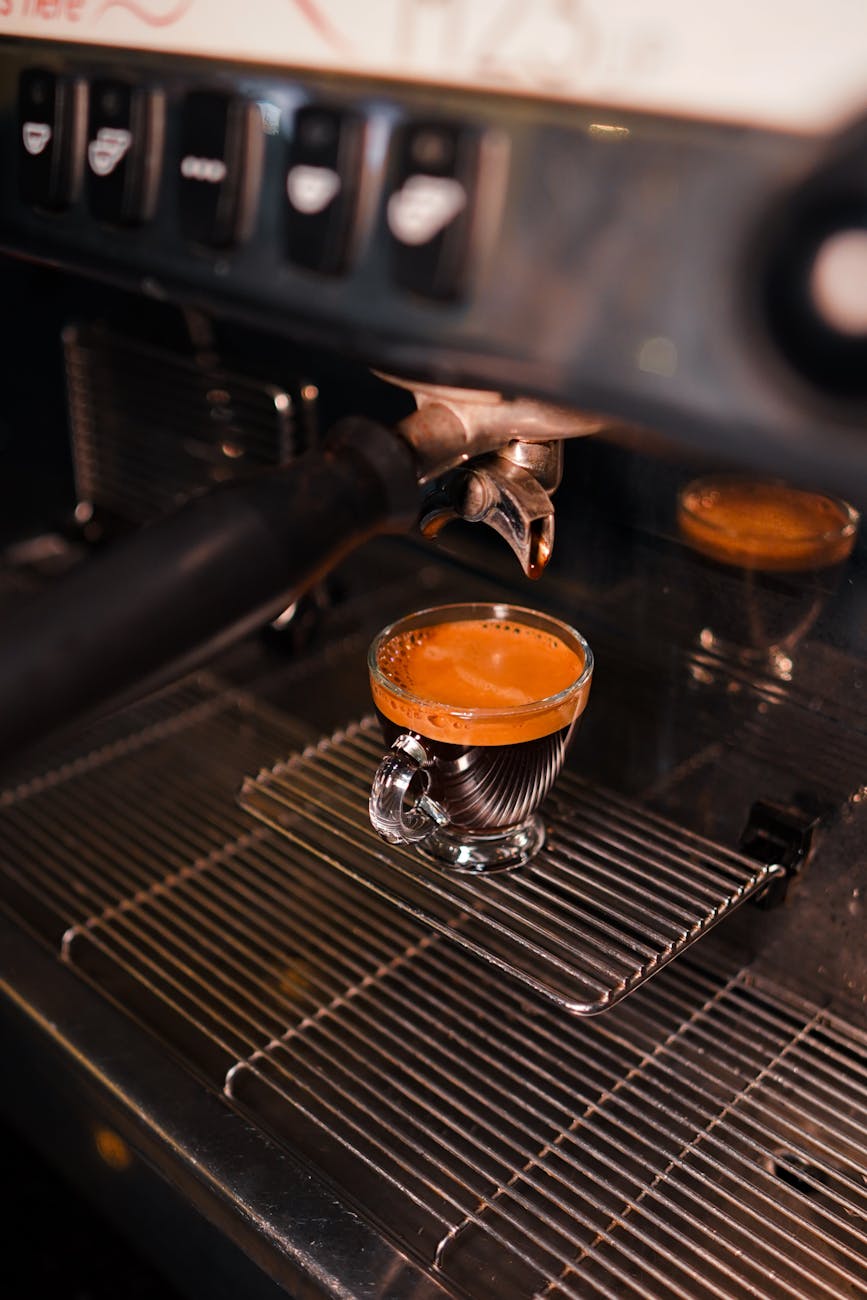
Welcome to the nuanced world of manual lever espresso, where the barista is in complete control of every variable. We often obsess over the grind size, dose, tamping pressure, and water temperature. However, one of the most critical, yet frequently overlooked, aspects of pulling a great shot is the application of force on the lever itself. Specifically, we’re talking about vertical force. This isn’t just about pushing down hard enough to reach nine bars of pressure; it’s about the direction, stability, and smoothness of that force. Understanding and mastering vertical force is the key that unlocks the true potential of a manual lever machine, transforming your espresso from inconsistent and unpredictable to consistently rich, balanced, and delicious. This article will explore why this concept is so vital for superior extraction.
What exactly is vertical force in espresso extraction?
In the context of a manual lever machine, vertical force refers to the pressure you apply to the lever in a perfectly straight, downward path. Imagine a straight line running from your shoulder, through your arm, and directly into the lever handle, pushing it perpendicular to the grouphead. The goal is to drive the piston down into the brew chamber without any side-to-side or front-to-back movement. It’s about pure, clean, downward motion.
This is fundamentally different from simply yanking the lever down. Pushing the lever from an angle, using only your arm strength, or shifting your body weight during the pull introduces lateral (sideways) forces. These non-vertical forces can cause the piston to tilt ever so slightly within the brew chamber. While this tilt might be microscopic and invisible to the naked eye, its impact on the coffee puck below is dramatic. Think of it as the difference between using a drill press, which applies perfect vertical force for a clean hole, and drilling by hand, where a slight angle can ruin the result. The same principle applies to the delicate structure of your coffee puck.
How inconsistent force destroys puck integrity and your shot
The coffee puck, even after a firm tamp, is a fragile structure. When you begin the extraction, especially after pre-infusion, the puck is saturated and even more susceptible to disruption. This is where non-vertical force becomes the enemy of good espresso. When the piston tilts, it applies uneven pressure across the surface of the coffee.
This uneven pressure immediately creates problems:
- It causes channeling: Water, like electricity, always follows the path of least resistance. When one side of the puck is compressed more than the other, the water will rush through the less-compressed side. This creates “channels” that bypass the majority of the coffee grounds, leading to a shot that is simultaneously under-extracted (sour, weak) and over-extracted (bitter, astringent) from the areas where the channels formed.
- It can fracture the puck: A sudden or angled force, especially during the crucial transition from pre-infusion to full pressure, can physically crack the puck. This creates a superhighway for water, ruining any chance of a balanced extraction. You might see this as a “spurter” from your bottomless portafilter.
Essentially, any force that isn’t perfectly vertical jeopardizes the uniform resistance that you worked so hard to create through careful puck preparation. It introduces an element of chaos right at the most critical moment of extraction.
Techniques for achieving a perfect vertical pull
Mastering vertical force is a physical skill that requires conscious practice. It’s about using your body mechanics to your advantage, turning the pull into a smooth, controlled motion rather than a feat of brute strength. Here are some actionable tips:
- Body positioning is key: Stand directly in front of your machine, with your feet shoulder-width apart. This stable base prevents you from leaning or pushing from an odd angle. Your dominant shoulder should be aligned with the lever.
- Use your body weight, not just your arms: Instead of trying to muscle the lever down with your biceps and triceps, use your core and body weight. Bend your knees slightly and let your body’s mass do the work. This creates a much more stable and consistent downward force.
- Focus on a smooth lever path: The pull should be one continuous, fluid motion. Avoid jerky or hesitant movements, as these can cause pressure fluctuations that disturb the puck. Concentrate on guiding the lever straight down. Some baristas even find that using two hands, one on top of the other, helps ensure the force is centered and vertical.
By focusing on these ergonomic principles, you remove the instability from the equation and provide the puck with the even, steady pressure it needs for a perfect extraction.
The foundation for advanced pressure profiling
Once you have a stable and repeatable vertical force technique, you can truly begin to explore the art of pressure profiling. Advanced techniques, like a long pre-infusion followed by a gentle pressure ramp or a declining pressure profile to reduce bitterness at the end of a shot, are impossible to execute reliably without a stable foundation.
If your basic application of force is uneven, any attempt at a nuanced pressure profile will be meaningless because channeling will dictate the flow, not your gentle manipulations. A consistent vertical pull ensures that what you intend to do with the pressure is what is actually happening at the puck.
The table below illustrates how different force applications impact the shot.
| Technique | Applied Force Characteristic | Puck Pressure Distribution | Likely Extraction Outcome |
|---|---|---|---|
| Vertical Body-Weight Press | Smooth, even, straight down | Consistent across the entire puck surface | Balanced, full-bodied shot with thick crema |
| Angled Arm Push | Side-loaded, inconsistent | High on one side, low on the other | High risk of channeling, leading to a thin, sour/bitter shot |
| Jerky, Unstable Pull | Rapidly fluctuating | Pressure spikes causing puck fractures | Unpredictable “spurters” and a muddy, unbalanced taste |
Mastering vertical force gives you the control and consistency needed to make deliberate, artistic choices about how you want your espresso to taste, shot after shot.
In conclusion, the application of vertical force is a cornerstone of high-quality manual lever espresso extraction. It moves beyond the simple metric of peak pressure and focuses on the quality and direction of that pressure throughout the entire pull. By applying force in a straight, stable, and downward motion, you protect the fragile integrity of the coffee puck, preventing the channeling and uneven flow that ruin so many shots. This technique is not just about avoiding bad espresso; it is the foundation upon which all advanced pressure profiling and shot control are built. Focusing on your stance, body mechanics, and a smooth lever path will do more for your shot consistency than almost any other variable. It is the human element that elevates the lever machine from a simple device to a true artisan’s tool.



 No products in the cart.