

Why is my espresso sour? A step-by-step fix for manual machines
There are few things more disappointing for a home barista than pulling a visually perfect espresso shot, complete with rich, thick crema, only to take a sip and be hit with a wave of intense sourness. It’s a sharp, acidic, and unpleasant taste that can make you question your beans, your machine, and your skills. The good news is that this is an incredibly common problem, especially when learning to use a manual espresso machine. Sourness is almost always a clear sign of one specific issue: under-extraction. This article will guide you through the science of extraction and provide a systematic, step-by-step process to diagnose and fix your sour shots, turning that pucker-inducing acidity into a balanced and sweet espresso.
Understanding the enemy: What is under-extraction?
Before you can fix the problem, you need to understand why it’s happening. Making espresso is a process of extraction. Hot, pressurized water flows through a tightly packed puck of ground coffee, dissolving solids and oils from the grounds and carrying them into your cup. However, not all of these compounds dissolve at the same rate.
Think of it as a sequence:
- First to extract: The initial compounds to dissolve are the acids and salts. These are responsible for the bright, fruity notes in coffee, but on their own, they taste sharp and sour.
- Next to extract: Sugars and caramels come next. These are the compounds that bring sweetness, body, and balance to the shot. They are crucial for mellowing out the initial acidity.
- Last to extract: Finally, the heavier, more complex compounds are extracted. These contribute to bitterness and the deeper, roast-like flavors.
A balanced shot has the perfect mix of all three stages. A sour shot is one where the brewing process was stopped too early or was too inefficient. The water successfully extracted the acids but didn’t have enough time or energy to extract the sugars needed to balance them. In contrast, if the process runs for too long, you get over-extraction, which results in a bitter, harsh, and hollow-tasting shot. Your goal is to find the sweet spot right in the middle.
Dialing in your grind and dose
The single most influential factor in controlling extraction is how you prepare your coffee puck. This starts with the two most fundamental variables: how much coffee you use (your dose) and how finely you grind it.
The water in your espresso machine is under immense pressure, and it’s looking for the easiest path through the coffee grounds. Your job is to create a puck that provides just the right amount of resistance.
- Grind size: This is your primary tool. If your grind is too coarse, there are large gaps between the coffee particles. Water rushes through these gaps incredibly quickly, not spending enough time in contact with the coffee to extract the sugars. The result is a fast, watery, and sour shot. To fix a sour shot, the first and most important adjustment is to grind your coffee finer. This creates a more compact puck, slows down the water flow, and increases the contact time, allowing for more complete extraction.
- Dose: This is the weight of dry coffee grounds you put in your portafilter basket. It’s crucial to be consistent. Use a coffee scale that measures to at least 0.1 grams. Most standard double-shot baskets are designed for 16-20 grams of coffee. Using too little coffee (under-dosing) can lead to a soupy puck and cause water to flow through too quickly, leading to under-extraction. Stick to a consistent dose recommended for your basket size and use grind size as your main variable for adjustments.
Make one small adjustment at a time. Grind a little finer, keep the dose the same, and then pull another shot to see how it affects the outcome.
Mastering your brew ratio and shot time
Once you have a consistent dose and have started adjusting your grind, you need a way to measure your success. This is where brew ratio and shot time become your most important diagnostic tools. Together, they tell you exactly how extracted your shot is.
Shot time is the total duration from the moment you start the pump or lift the lever until you stop the shot. For a balanced espresso, a common target is between 25 and 35 seconds. A shot that gushes out in 15 seconds is almost guaranteed to be sour because the water didn’t have enough contact time.
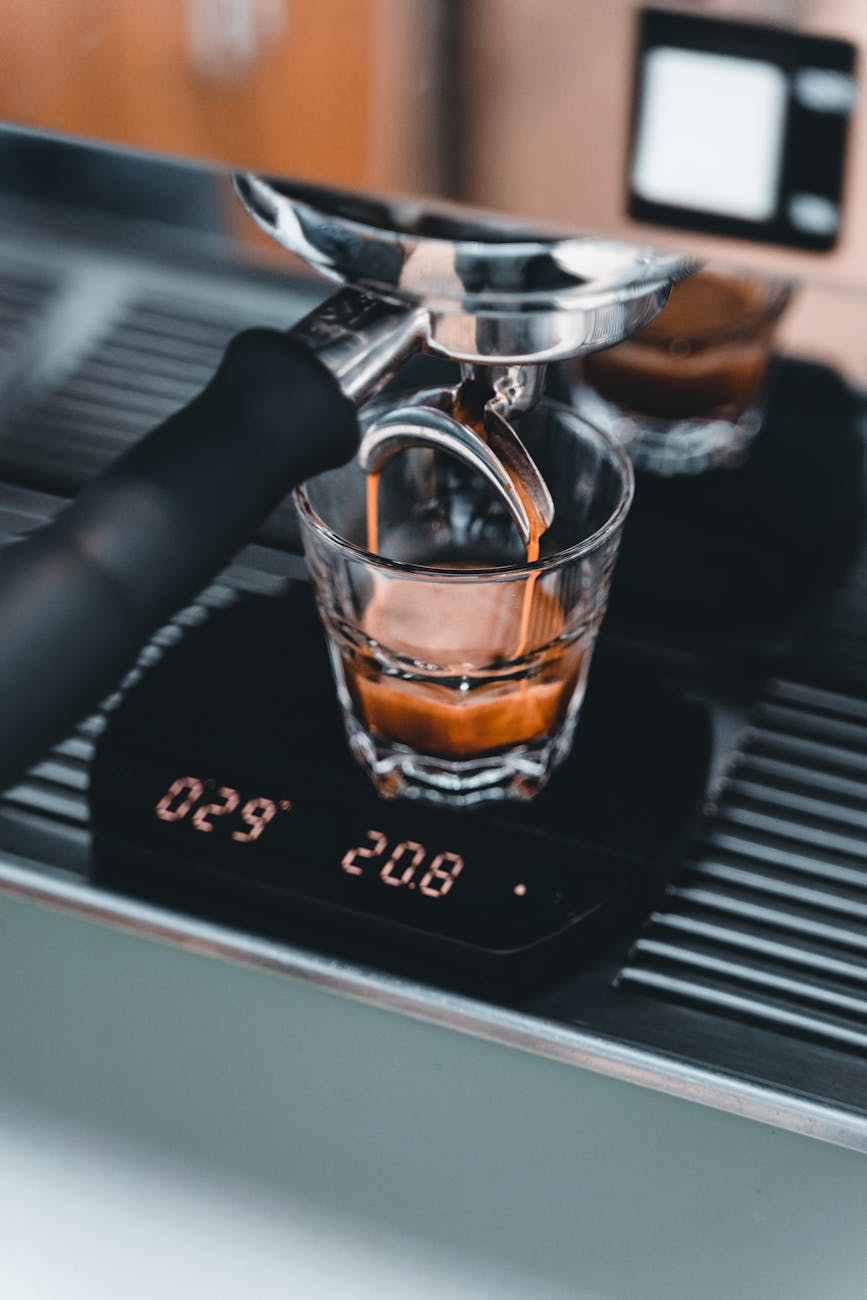
Brew ratio is the relationship between the weight of your dry coffee grounds (dose) and the weight of the liquid espresso in your cup. To measure this, you need a scale under your cup while you pull the shot. A great starting point for modern espresso is a 1:2 ratio. For example:
- Dose: 18 grams of dry coffee
- Yield: 36 grams of liquid espresso
Combining these two metrics gives you a clear recipe. Your goal should be to hit your target yield (e.g., 36g) in your target time (e.g., 30 seconds). If your shot is sour and you only get 36g of espresso in 18 seconds, you know exactly what to do: grind finer. This will slow the shot down, pushing the time closer to 30 seconds and giving the water more time to extract those crucial sugars.
The often overlooked variables: Temperature and puck prep
If you have adjusted your grind size to achieve a 1:2 ratio in about 30 seconds and are still tasting some sourness, it’s time to look at the finer details. These variables are more subtle but can be the key to unlocking a perfectly balanced shot.
Water temperature: Extraction is a chemical reaction, and temperature plays a huge role. Water that is too cold lacks the thermal energy to dissolve the sugars and oils from the coffee effectively, even if your time and ratio are perfect. This can result in a flat and sour shot. Most manual machines require a thorough warm-up routine. Always flush the group head before your first shot to stabilize its temperature. If your machine has a temperature controller (PID), try increasing the brew temperature by a degree or two (e.g., from 92°C to 94°C or 198°F to 201°F).
Puck preparation and channeling: Even with the perfect grind, dose, and temperature, an unevenly prepared puck can ruin your shot. If there are clumps or uneven density in your coffee grounds, water will exploit the weak spots and create “channels,” over-extracting those small areas and under-extracting the rest of the puck. This leads to a confusing shot that tastes both sour and bitter. To fix this, focus on:
- Distribution: Use a distribution tool (like a WDT or Weiss Distribution Technique tool) to break up clumps and create a fluffy, even bed of grounds.
- Tamping: Tamp firmly and, most importantly, level. An uneven tamp will encourage channeling on the lower side.
Troubleshooting sour shots: A quick guide
| Symptom | Likely Cause | Primary Solution |
|---|---|---|
| Shot tastes sour and runs very fast (under 20 seconds). | Grind is too coarse. | Grind finer. This is the most common fix. |
| Shot time is correct (25-35s) but still tastes sour. | Water temperature is too low or channeling is occurring. | Ensure machine is fully preheated. Increase brew temperature if possible. Improve puck prep (WDT, level tamp). |
| Shot is watery, blondes quickly, and tastes sour. | Channeling or under-dosing. | Check your dose is appropriate for your basket. Focus on even distribution and tamping. |
| Using a very light roast coffee that tastes acidic. | Light roasts are naturally more acidic and harder to extract. | Try increasing the brew ratio (e.g., 1:2.5) or increasing the water temperature to boost extraction. |
Conclusion: The path to sweet espresso
Fixing sour espresso is a methodical process of elimination, not a game of chance. By understanding that sourness is a symptom of under-extraction, you can make targeted adjustments with confidence. Always start with the most impactful variable: your grind size. Aiming for a classic 1:2 brew ratio in about 25 to 35 seconds will solve the problem more than 90% of the time. Once you have mastered that fundamental relationship, you can begin to fine-tune your shots by considering secondary factors like water temperature and puck preparation techniques. Remember to change only one thing at a time and taste the results. With a little patience and a systematic approach, you can leave sour shots behind and consistently pull sweet, balanced, and delicious espresso from your manual machine.
 No products in the cart.