

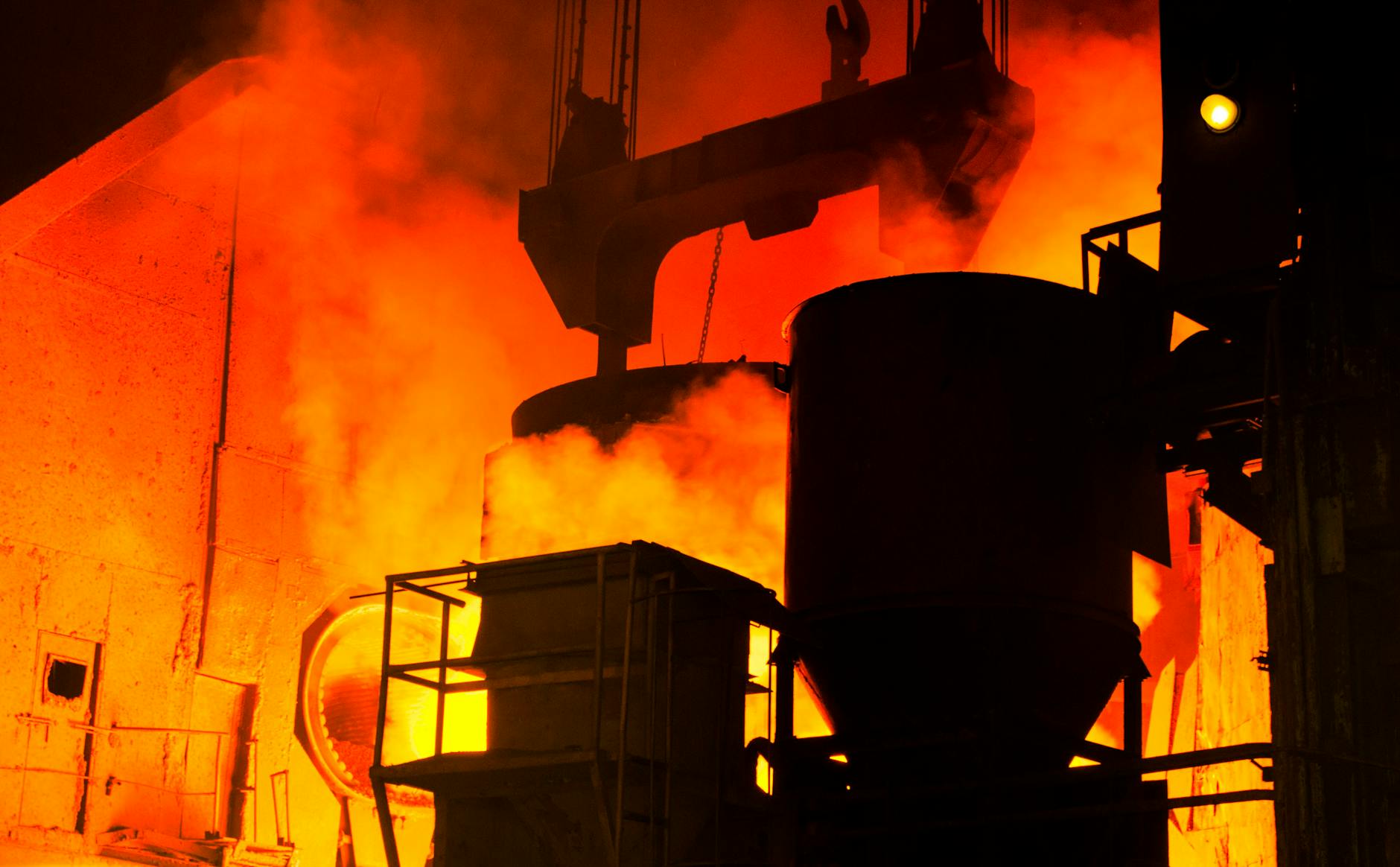
Managing basket temperature without a boiler: A practical guide
For decades, central boilers have been the workhorse of industrial process heating, providing the steam or hot water needed to manage temperatures in vessels, reactors, and baskets. While reliable, these large-scale systems come with significant challenges, including high capital investment, extensive maintenance schedules, large physical footprints, and stringent regulatory compliance. Many businesses are now seeking more flexible, efficient, and cost-effective ways to achieve precise temperature control. Moving away from a traditional boiler doesn’t mean sacrificing performance. In fact, modern alternatives can offer superior precision and scalability for specific applications. This article explores practical and effective methods for managing basket temperature without relying on a central boiler system, focusing on technologies that provide targeted, on-demand heat.
Understanding the challenge of boiler-free heating
In many industries, from food processing to chemical manufacturing, the term “basket” often refers to a jacketed vessel or tank. This design features an outer shell surrounding the main container, creating a hollow space (the jacket) through which a heating or cooling fluid is circulated. Maintaining a precise basket temperature is not just a suggestion; it’s critical for ensuring product quality, consistency, and safety. Inconsistent heat can ruin a batch, while runaway temperatures can create hazardous conditions.
The decision to move away from a traditional boiler system is typically driven by several key factors:
- Efficiency: Central boilers often suffer from significant heat loss as steam or hot water travels through extensive piping to its point of use. Boiler-free, point-of-use systems deliver heat directly where it’s needed, minimizing energy waste.
- Scalability and Flexibility: A central boiler is an all-or-nothing investment. Alternative systems allow for modular expansion, letting you add heating capacity for one basket at a time as your operation grows.
- Cost: While operating costs vary, the initial capital expenditure, installation complexity, and ongoing maintenance of a boiler system can be prohibitive, especially for small to medium-sized operations.
- Regulations: High-pressure steam boilers are often subject to strict safety regulations and require certified operators, adding to the administrative and operational burden.
Understanding these drivers helps frame the search for an alternative. The goal is to find a solution that provides the necessary heat duty and control without the inherent complexities of a large, centralized system.
Electric process heaters as a primary alternative
One of the most direct and efficient ways to heat a basket jacket without a boiler is through electric process heating. This technology uses electrical resistance to generate heat, which is then transferred to a circulating fluid like water, a glycol mixture, or thermal oil. The two most common configurations for this application are circulation heaters and immersion heaters integrated into a small, closed-loop skid system.
A typical setup involves a self-contained unit with a pump, an electric heater, an expansion tank, and controls. The pump circulates the fluid from the unit, through the vessel’s jacket, and back to the heater. This closed loop is exceptionally efficient because nearly 100% of the electrical energy is converted directly into heat within the fluid. This stands in stark contrast to boilers, where energy is lost through the stack and along pipes.
The primary advantage of electric systems is their unparalleled precision. They can be integrated with sophisticated PID (Proportional-Integral-Derivative) controllers and temperature sensors, allowing for temperature control within a single degree. This level of accuracy is vital for sensitive processes. Furthermore, they are compact, easy to install at the point of use, and produce no local emissions, making them ideal for clean environments or facilities with environmental restrictions.
Thermal fluid systems for high-temperature demands
When a process requires temperatures above the boiling point of water (100°C or 212°F), a thermal fluid system, often called a hot oil heater, becomes an excellent boiler-free option. Instead of using water or steam, these systems circulate a specialized thermal oil or fluid. This is a game-changer because these fluids can reach very high temperatures, sometimes exceeding 300°C (572°F), while remaining at very low atmospheric pressure.
This low-pressure operation is a major safety and cost advantage. High-pressure steam requires heavily reinforced, expensive piping and vessels, along with rigorous safety protocols. A thermal fluid system avoids this entirely. Because the fluid remains in a liquid state, it provides very even and stable heat transfer across the entire surface of the basket jacket, eliminating the “hot spots” that can sometimes occur with steam heating.
Like electric process heaters, thermal fluid systems operate in a closed loop, which minimizes fluid loss and prevents contamination. They also avoid the problems of corrosion, scaling, and freezing associated with water-based systems. While the initial cost of the thermal fluid itself can be a consideration, the long-term benefits of enhanced safety, reduced maintenance, and precise high-temperature control make it a compelling choice for demanding applications.
Comparing the alternatives: a practical breakdown
Choosing the right heating method depends on a careful evaluation of your specific operational needs. A central boiler, an electric process heater, and a thermal fluid system each have distinct profiles when it comes to cost, performance, and maintenance. To make an informed decision, it’s helpful to compare them across several key metrics.
The table below provides a side-by-side comparison to help illustrate the primary differences between these systems.
| Metric | Traditional Boiler System | Electric Process Heater | Thermal Fluid System |
|---|---|---|---|
| Initial Cost | Very High | Low to Medium | Medium to High |
| Operating Cost | Depends on fuel (gas/oil), generally lower | Depends on electricity prices, can be higher | Medium (electricity/gas + fluid cost) |
| Temperature Range | Medium to High (pressure dependent) | Low to Medium-High | Medium to Very High |
| Precision | Moderate | Excellent | Very Good |
| Maintenance | High (water treatment, inspections) | Low | Medium (fluid checks, pump maintenance) |
| Footprint | Very Large | Small (point-of-use) | Medium |
For operations that require exceptional precision for a small number of vessels, an electric process heater is often the most logical and cost-effective choice. Conversely, for processes demanding consistent, uniform heat at temperatures above 150°C, a thermal fluid system provides performance and safety benefits that are hard to beat. The key is to match the technology to the application’s unique demands.
Ultimately, stepping away from a central boiler system is not just a possibility; it is a strategic decision that can lead to greater efficiency, control, and scalability. The technologies discussed here, from nimble electric heaters to robust thermal fluid systems, represent a modern approach to industrial process heating. By carefully evaluating the specific requirements of your application—such as target temperature, required precision, and budget—you can select a boiler-free solution that delivers superior performance. This shift allows businesses to optimize their processes, reduce their operational footprint, and gain a competitive edge in a demanding market, proving that powerful and precise heating doesn’t always have to come from a boiler room.
 No products in the cart.