

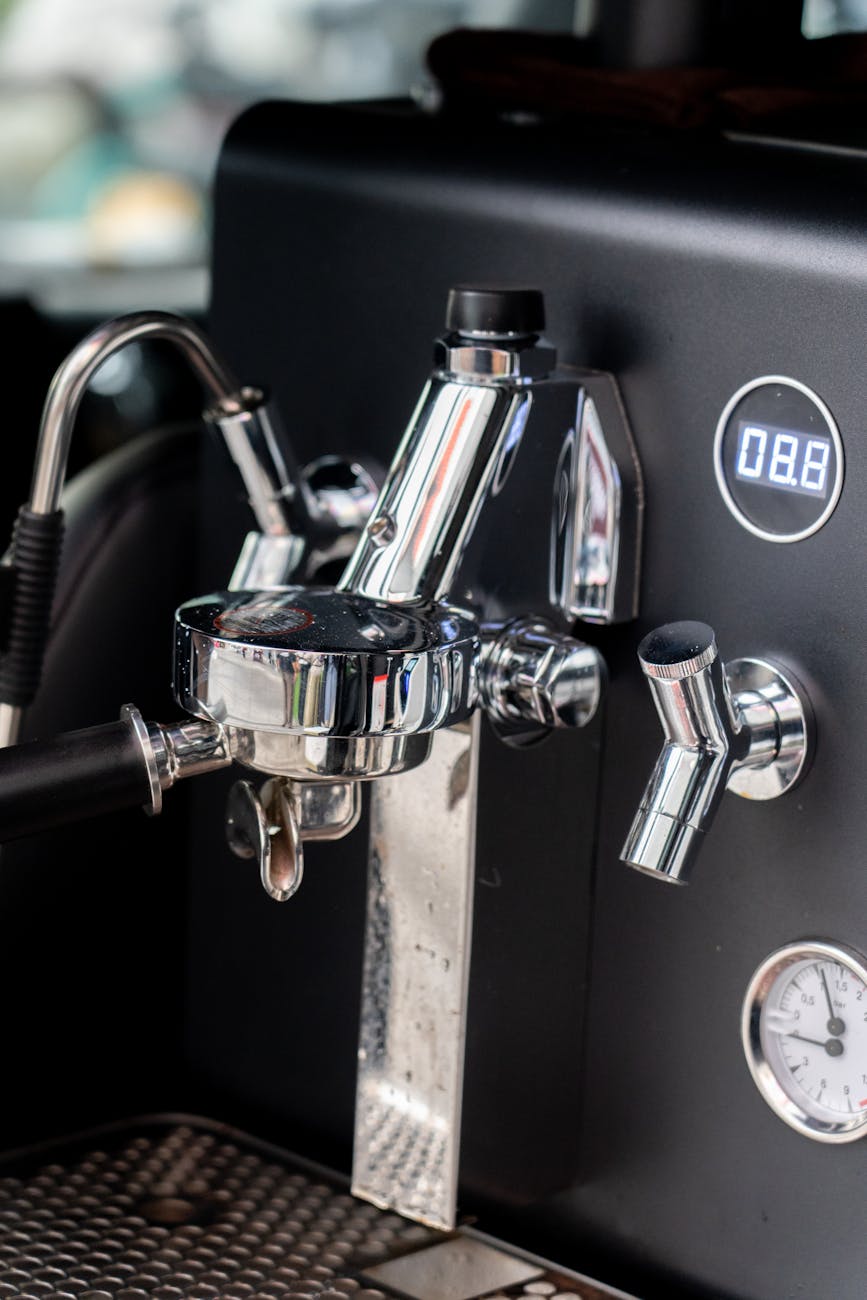
The pursuit of the perfect espresso shot is a journey filled with variables. From the bean and the grind to the machine’s pressure, every element plays a critical role. Yet, one of the most frequently overlooked steps is what happens right before you tamp: coffee ground distribution. An uneven bed of coffee is the primary cause of channeling, leading to inconsistent and disappointing shots. This guide will delve into the world of espresso distribution tools, exploring their mechanics and clarifying their purpose. We will break down how these seemingly simple gadgets work, from needle-based WDT tools to wedge-style levelers, to help you understand how to eliminate channeling and unlock the true potential of your coffee beans.
Why distribution matters: The science of puck prep
Before we can understand the tools, we must first understand the problem they solve. After grinding, coffee grounds are often clumpy and unevenly settled in the portafilter basket. This creates a landscape of varying density. When you begin the extraction, hot water under roughly nine bars of pressure is forced through this bed of coffee, which we call the “puck”. Water is lazy; it will always seek the path of least resistance.
If the puck has dense areas and less dense areas, the water will rush through the less dense spots. This phenomenon is called channeling. These channels allow water to bypass most of the coffee, leading to a disastrously uneven extraction. The grounds in the channel’s path become over-extracted, releasing bitter and astringent flavors. Meanwhile, the denser, untouched areas of the puck remain under-extracted, contributing sour and weak notes. The result is a single shot that is simultaneously bitter, sour, and unsatisfying. The primary goal of puck preparation, or “puck prep,” is to create a coffee bed of homogenous density, ensuring water flows through it evenly for a balanced and delicious extraction.
From simple to sophisticated: Types of espresso distribution tools
To combat the problem of channeling, a variety of tools have been developed. While they all aim to improve puck consistency, they achieve it through fundamentally different mechanics. Understanding these differences is the first step toward choosing the right tool for your workflow and achieving a better extraction. Broadly, they fall into two main categories: needle-based tools and surface-leveling tools.
- WDT (Weiss Distribution Technique) Tools: This method involves using a set of fine needles to stir the coffee grounds. The concept originated with a simple paperclip but has since evolved into sophisticated tools with dozens of fine, strategically placed needles. The mechanical action is one of de-clumping and agitation. By raking through the entire depth of the coffee bed, a WDT tool breaks up clumps and redistributes the particles, effectively eliminating density variations from the bottom of the basket to the top.
- Spinner or Leveler Tools: These tools, often shaped like a small puck themselves, have a set of angled wedges or fins on their base. They are designed to rest on the rim of the portafilter basket. When you spin the tool, the wedges groom the surface of the coffee grounds. Their mechanical action is one of surface displacement, pushing grounds from high spots into low spots to create a perfectly flat and level bed for tamping. However, this action is largely superficial and can be misleading, a point we’ll explore next.
Needles vs. wedges: A look at distribution mechanics
The core difference between a WDT tool and a spinner lies in how and where they move the coffee grounds. This is the most crucial concept to grasp when evaluating their effectiveness. A needle-based WDT tool addresses the root cause of channeling: clumps and density variations throughout the entire puck.
The thin needles, ideally less than 0.4mm in diameter, slice through clumps and “fluff up” the coffee, creating a homogenous, low-density bed. Think of it as tilling a garden to break up compacted soil. This process ensures that when you tamp, you are uniformly compressing a bed that is already consistent in density. There are no hidden pockets of low density for water to exploit.
In contrast, a spinner tool with wedges primarily acts on the surface. While it creates a visually perfect, level top layer, it does not address underlying issues. If there are clumps or low-density areas at the bottom of the basket, the spinner will simply groom the top layer over them. Worse, if the tool is set too deep, its wedges can compress the top layer of coffee, creating a denser cap over a less dense bottom. This can actually increase the likelihood of channeling, as water hits the dense cap and is then forced aggressively through any weaker points below. A level surface does not guarantee a well-distributed puck.
Putting it all into practice: Choosing and using your tool
Choosing the right tool depends on understanding your goal. If your objective is to fundamentally improve extraction quality by creating a homogenous puck, a WDT tool is non-negotiable. It is the most effective method for breaking up clumps and ensuring even density. For effective use, insert the needles to the bottom of the basket and stir in circular or crisscross patterns, ensuring you cover the entire area. Afterwards, a gentle tap on the counter will settle the grounds into a relatively level bed, ready for tamping.
A spinner or leveler tool is best viewed as a finishing or grooming tool, not a primary distribution device. Its main benefits are speed and creating a perfectly polished surface, which can lead to a more consistent tamping angle. The ideal workflow for maximum quality involves using a WDT tool first to handle the deep distribution, followed by a light spin with a leveler set to a very shallow depth to simply polish the surface before tamping.
| Tool Type | Primary Mechanic | Area of Effect | Best For |
|---|---|---|---|
| WDT (Needle) Tool | De-clumping & Agitation | Entire coffee bed (full depth) | Fixing the root cause of channeling; achieving true homogenous density. |
| Spinner / Leveler | Surface Grooming & Displacement | Top layer of coffee grounds | Creating a perfectly level surface for tamping; workflow speed (often used after WDT). |
In conclusion, understanding the mechanics of espresso distribution tools is paramount for anyone serious about their coffee. We’ve seen that the core issue is not an unlevel surface but an uneven density within the coffee puck, which leads to channeling and poor extraction. While spinner or leveler tools offer a fast way to create a pristine surface, their mechanical action is superficial and can even hide or worsen underlying density problems. The true workhorse of puck prep is the needle-based WDT tool, which addresses the root cause by breaking up clumps and homogenizing the entire coffee bed. For the best results, a thoughtful combination of both—WDT for distribution and a leveler for polishing—can provide the ultimate foundation for a perfect tamp and a consistently delicious espresso shot.
 No products in the cart.