

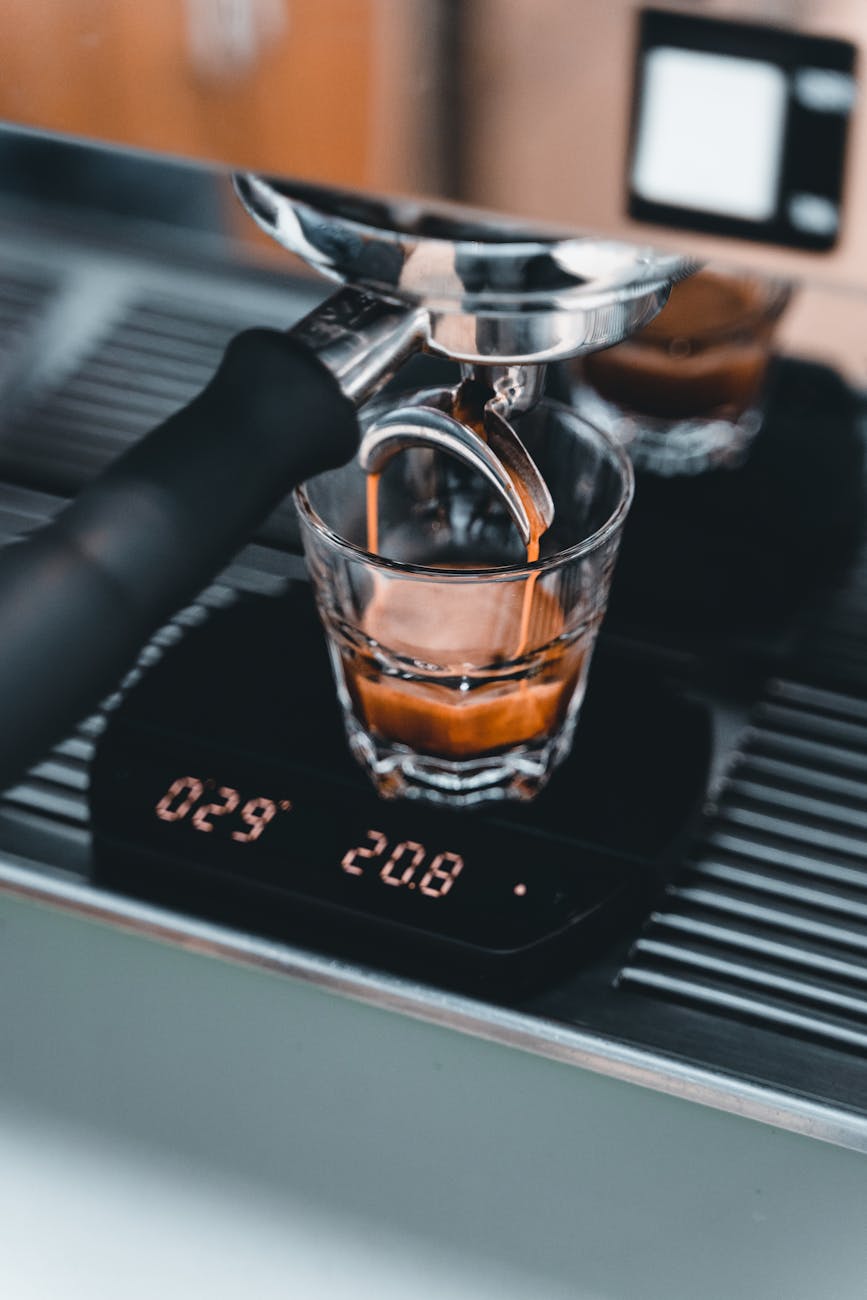
The quest for the perfect espresso shot is a journey filled with variables. You can have the best beans, a top-tier grinder, and a state-of-the-art machine, yet still be disappointed by a sour, bitter, or watery pull. Often, the culprit is an invisible villain known as channeling. This occurs when water, under immense pressure, finds a path of least resistance through the coffee puck instead of saturating it evenly. The result is an uneven extraction that simultaneously under-extracts some parts of the coffee and over-extracts others. This article will dive deep into the most common puck preparation mistakes that invite channeling into your portafilter and provide clear, actionable steps to banish it for good.
The foundation: Inconsistent grinding and dosing
Before you even think about distributing or tamping, your espresso’s fate is heavily influenced by the coffee grounds themselves. The primary goal is to create a bed of coffee with uniform particle size and density. Channeling begins when this uniformity is compromised from the start. A grinder that produces a wide range of particle sizes—from large boulders to fine dust—creates an inherently unstable foundation. Water will rush past the large particles and get bogged down by the fines, creating an uneven flow from the very first second.
Even with a great grinder, clumps are a major enemy. These are small clusters of coffee grounds that stick together due to static or oils. If left in the puck, they create dense pockets that water struggles to penetrate, forcing it to flow around them into less dense areas. This is the very definition of channeling. Similarly, dosing inconsistently can sabotage your shot. Over-dosing your basket can cause the puck to press against the shower screen, fracturing it before extraction even begins. Under-dosing can leave too much headspace, causing the initial infusion of water to disrupt the puck’s surface, creating channels before the full pressure is applied.
The great equalizer: Poor distribution techniques
Once you have your dose in the portafilter, the next crucial step is distribution. This is arguably the most important stage in preventing channeling. The goal is to arrange the coffee grounds into a homogenous, level bed, eliminating any dense or sparse areas. Unfortunately, many common techniques do more harm than good.
A frequent mistake is aggressively tapping the side of the portafilter. While it may level the surface, this action causes particle stratification. The smaller, finer particles vibrate down to the bottom of the basket while the larger, coarser particles rise to the top. This creates distinct layers of density, making it impossible for water to flow through evenly. The water will hit the dense layer of fines and be forced to find an easier path, creating channels.
To combat this and break up the clumps mentioned earlier, the most effective method is the Weiss Distribution Technique (WDT). This involves using a tool with very fine needles (typically 0.4mm or less) to rake through the coffee grounds. This action does two things perfectly:
- It breaks up any and all clumps, ensuring no dense pockets exist.
- It homogenizes the grounds, distributing them evenly throughout the entire depth of the basket, not just the top layer.
After WDT, a single, gentle vertical tap on the counter can help settle the grounds into a flat bed, ready for the final step.
The final seal: Tamping errors
With a beautifully fluffy and distributed bed of coffee, tamping is the final step to lock everything in place. The purpose of the tamp is to compact the grounds into a tight, level puck that will provide the necessary resistance to the water pressure. A simple mistake here can undo all your previous hard work.
The most critical tamping error is an uneven tamp. If you apply more pressure to one side, you create a sloped puck. Since water is lazy and will always follow the path of least resistance, it will flow much faster through the shallower side of the puck. This side will be quickly over-extracted and blond, while the deeper side remains under-extracted. The result is a shot that is both bitter and sour.
While baristas once obsessed over applying exactly 30 pounds of pressure, we now know that consistency and levelness are far more important than the specific force. As long as you are fully compressing the coffee, the exact pressure is less critical. The key is to apply that pressure perfectly perpendicular to the countertop. To eliminate human error, investing in a self-leveling or calibrated tamper can be a game-changer, ensuring a perfectly level puck every single time.
A summary of puck prep solutions
Achieving a channel-free extraction is about building a consistent and repeatable workflow. Each step builds upon the last, and skipping or fumbling one can compromise the entire process. By understanding why a mistake leads to channeling, you can better implement the solution. Below is a table summarizing the common issues and their corresponding fixes to build a solid puck prep routine.
| Common Mistake | Why it Causes Channeling | The Fix |
|---|---|---|
| Clumpy or inconsistent grind | Creates pockets of high and low density, giving water an easy path to exploit. | Use a quality burr grinder and implement the Weiss Distribution Technique (WDT) to break up clumps. |
| Side-tapping the portafilter | Causes particle stratification, with fines sinking to the bottom and creating a dense, water-resistant layer. | Instead, tap the portafilter vertically on the counter once to settle the grounds after WDT. |
| Uneven or angled tamp | Creates a sloped puck with uneven density, causing water to flow much faster through the shallower side. | Focus on a perfectly level tamp. Use a self-leveling tamper to ensure consistency. |
| Inconsistent dosing | Too little or too much coffee affects the headspace, leading to puck erosion or fracturing upon infusion. | Use a scale to weigh your dose to within 0.1 grams for every shot. |
By integrating these fixes into your routine, you move from guessing to executing, giving you control over the extraction and, ultimately, the final taste in your cup.
In conclusion, the battle against channeling is won before the water ever touches the coffee. It’s a meticulous process of creating a perfectly uniform and level puck of coffee, free from imperfections that water can exploit. As we’ve explored, this starts with a consistent grind and an accurate dose. It then moves to the critical stage of distribution, where techniques like WDT are essential for eliminating clumps and homogenizing the grounds. Finally, a perfectly level tamp seals the deal, ensuring uniform resistance. By avoiding common pitfalls like side-tapping and angled tamping, you create a puck that encourages water to flow through it evenly, unlocking the full, balanced, and delicious flavor potential of your coffee beans every single time.



 No products in the cart.