

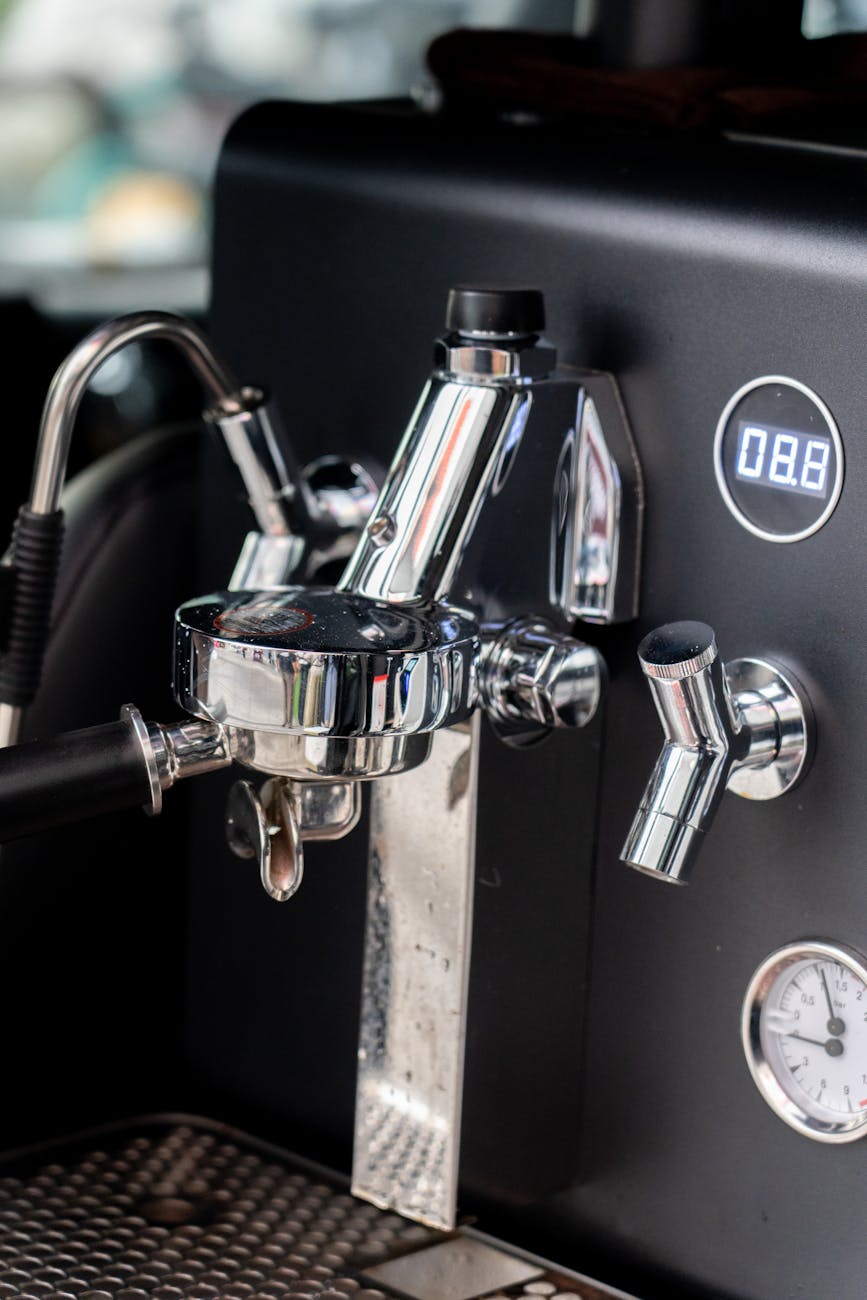
The allure of a perfect café-style coffee is undeniable. That rich, aromatic espresso, the velvety texture of steamed milk, the satisfying ritual of its creation. For years, this experience was largely confined to your favorite coffee shop. Today, bringing that professional quality into your home is more accessible than ever. Building your dream home cafe is a rewarding journey that transforms your morning routine into a craft. This guide will walk you through the essential professional equipment, from the centerpiece espresso machine to the crucial accessories that separate a good coffee from a truly exceptional one. We will explore how to choose the right gear for your needs, ensuring every cup you brew is a step towards barista-level perfection right in your own kitchen.
The heart of your cafe: Choosing the right espresso machine
The espresso machine is the engine of your home cafe, and selecting the right one is the most critical decision you’ll make. It’s not just about aesthetics; it’s about control, consistency, and matching the machine’s capabilities to your ambition. For the aspiring home barista who wants to be deeply involved in the process, a semi-automatic machine is the ideal choice. These machines give you full control over the grinding, tamping, and timing of the shot, allowing you to experiment and perfect your technique. They are the true workhorses for the coffee enthusiast.
As you explore options, you’ll encounter different boiler systems. A single boiler machine is a good entry point, but it requires a waiting period between brewing espresso and steaming milk. A heat exchanger (HX) machine allows you to do both simultaneously, offering a significant workflow improvement. At the top end, dual boiler machines provide ultimate temperature stability and control, with separate boilers for brewing and steaming. This precision is vital for consistently extracting the best flavors from your coffee beans. Features like a PID (Proportional Integral Derivative) controller, which digitally regulates temperature, are no longer a luxury but a near necessity for serious home brewing.
| Machine Type | Level of Control | Best For | Key Feature |
|---|---|---|---|
| Semi-Automatic | High | The hands-on enthusiast who wants to learn the craft. | User starts and stops the brew cycle manually. |
| Automatic | Medium | Those who want consistency with less manual timing. | Machine automatically stops the shot at a pre-set volume. |
| Super-Automatic | Low | Convenience seekers who prioritize speed and ease. | Grinds, tamps, and brews with the push of a button. |
The unsung hero: Why your grinder matters most
It’s a common saying among coffee experts: you should pair a great grinder with a good machine, not the other way around. Your coffee grinder is arguably more important than your espresso machine. Without a consistent, fine grind, even the most expensive machine cannot produce a quality shot of espresso. The key is to invest in a burr grinder. Unlike blade grinders that chop beans into uneven pieces, burr grinders use two revolving abrasive surfaces to crush beans into a uniform size. This uniformity is essential for an even extraction, preventing a shot that is simultaneously sour and bitter.
Within burr grinders, you’ll find conical and flat burrs. Conical burrs are often found in entry-level and prosumer grinders and are known for their durability and fluffy grounds. Flat burrs, typically seen in higher-end and commercial grinders, are praised for producing a highly uniform particle size that can highlight clarity and sweetness in the cup. Look for a grinder with stepless or micro-step adjustments, which allows for tiny, precise changes to the grind size. This level of control is necessary to “dial in” your espresso, a process of adjusting the grind to achieve the perfect extraction time and taste.
Essential barista accessories: The tools of the trade
With your machine and grinder selected, it’s time to assemble the supporting cast of tools. These accessories are not just for show; they are fundamental to achieving consistency and improving your workflow. A poor tamp or an inaccurate dose can ruin a potentially perfect shot, so investing in quality tools is a small price to pay for great coffee. These items will help you replicate your best shots and diagnose any issues with your technique.
- A quality tamper: Choose one that fits your portafilter basket snugly (most prosumer machines use 58mm). A heavy, comfortable tamper helps you apply even, consistent pressure every time.
- A digital scale: Precision is everything. A scale accurate to 0.1 grams is essential for weighing your coffee dose (grounds in) and your espresso yield (liquid out), allowing you to master brew ratios.
- A bottomless portafilter: This is an invaluable learning tool. It exposes the bottom of the basket, allowing you to see your extraction in real-time and identify issues like channeling, where water punches holes through the coffee puck.
- Milk frothing pitcher: If you enjoy lattes or cappuccinos, a stainless steel pitcher with a well-defined spout is crucial for creating silky microfoam and attempting latte art.
- Knock box and tamping mat: These are quality-of-life tools. A knock box gives you a convenient place to discard used coffee pucks, while a tamping mat protects your counter and portafilter.
Beyond the brew: Water, beans, and setup
Your equipment is ready, but two final ingredients will make or break your coffee experience: water and beans. Since espresso is over 98% water, the quality of your water significantly impacts the final taste. Tap water can contain minerals and chlorine that create off-flavors and, more importantly, can build up scale inside your expensive machine, causing serious damage. Using a simple carbon filter pitcher can be a good first step. For the best results and machine longevity, consider using a dedicated water softening and filtration system or making your own coffee water using distilled water and mineral packets.
Finally, the coffee itself. The difference between stale, oily beans from a supermarket and freshly roasted beans from a specialty roaster is night and day. Look for roasters that print a “roasted on” date on the bag, and aim to use your beans within one to four weeks of that date for peak flavor. As you bring it all together, think about your space. Create a dedicated coffee station with your grinder, machine, and tools within easy reach. A logical workflow not only makes the process more enjoyable but also more efficient, turning your corner of the kitchen into a true home cafe that you’ll love using every single day.
Building your dream home cafe is a journey of discovery. It begins with selecting the core components: an espresso machine that matches your skill and passion, and a high-quality burr grinder to unlock the potential of your beans. From there, you assemble the essential barista tools that enable precision and consistency, turning a guessing game into a repeatable craft. Finally, you complete the picture by focusing on the foundational elements of great coffee—filtered water and fresh, specialty beans. By investing in the right professional equipment and paying attention to these details, you are not just buying appliances; you are embracing a hobby. You are creating a personal ritual that rewards you with exceptional coffee and the immense satisfaction of having crafted it yourself.
Image by: Peter Xie
https://www.pexels.com/@peter-xie-371876898
 No products in the cart.