


Welcome to the world of specialty coffee. The aroma of freshly ground beans, the satisfying ritual of brewing, and the first sip of a perfectly extracted cup can transform a morning routine into a moment of pure joy. Many coffee lovers assume that achieving this cafe-quality experience at home requires a huge budget and a counter full of intimidating equipment. The truth is much more accessible. Building your own home cafe is a gradual journey, not a sprint. This guide is designed for beginners, showing you how to invest wisely in professional-grade tools. We will start with the absolute essentials that form the foundation of great coffee and then explore the paths you can take to elevate your daily brew from good to truly exceptional.
The foundation: Grinder and scale
Before you even think about a brewer, two pieces of equipment stand out as the most crucial investments for your home cafe: a quality burr grinder and a digital scale. Skipping these is like trying to build a house without a foundation. Every other tool relies on the precision and consistency these two items provide. A great grinder and scale will have a more significant impact on your coffee quality than the most expensive brewer.
Why a burr grinder? Coffee beans contain flavor compounds that are extracted by water. To get a balanced extraction, the coffee grounds need to be a uniform size. Blade grinders, which operate like a propeller, smash beans into a mix of fine dust and large chunks. This inconsistency leads to a messy cup where some grounds are over-extracted (bitter) and others are under-extracted (sour). A burr grinder, on the other hand, uses two revolving abrasive surfaces to crush beans into a consistent size. This control is the secret to a balanced, delicious brew. For beginners, an excellent manual grinder like a Timemore C2 or an electric model like the Baratza Encore is a fantastic starting point.
The second pillar is a digital scale with 0.1-gram accuracy and a built-in timer. Coffee brewing is a science of ratios. A common starting ratio for filter coffee is 1:16, meaning 1 gram of coffee for every 16 grams of water. Measuring by volume with scoops is wildly inaccurate, as different beans have different densities. A scale allows you to use the exact same amount of coffee and water every single time, making your results repeatable. Consistency is key to learning and improving your technique. It allows you to change one variable at a time, like grind size, to see how it affects the final taste.
Choosing your brewing method
With your grinder and scale ready, it’s time to choose how you want to make your coffee. This choice will influence your daily ritual and the flavor profile of your cup. Each method interacts with the coffee grounds differently, highlighting unique characteristics. For a beginner, it’s best to start with one or two methods to master before expanding your collection. Your choice here is connected directly to the foundation; you will adjust your grind size from the previous chapter specifically for the brewer you select.
Here are three excellent and distinct starting points:
- French press: The immersive classic. This is perhaps the most forgiving brewer. The method involves full immersion, where coffee grounds steep directly in hot water before being separated by a mesh filter. This produces a full-bodied, rich, and heavy cup. Because the metal filter allows oils and some fine sediment into the cup, the result is a wonderfully textured brew. It requires a coarse grind and is a simple, reliable way to make a great batch of coffee.
- AeroPress: The versatile traveler. Part immersion, part pressure, the AeroPress is a coffee-making chameleon. This lightweight and durable plastic brewer uses a plunger to force water through coffee grounds. It’s incredibly versatile, capable of making everything from a clean, filter-style cup to a concentrated, espresso-like shot that you can dilute. It’s also known for its speed and ridiculously easy cleanup, making it a favorite for both home use and travel.
- Pour-over: The controlled approach. If you enjoy a hands-on, meditative process, pour-over is for you. This method involves manually pouring water over a bed of coffee grounds in a filter-lined dripper. Brewers like the Hario V60 or Kalita Wave are famous for producing exceptionally clean, bright, and nuanced cups that highlight the delicate flavors of a coffee bean. To do it right, you’ll need a gooseneck kettle, which gives you precise control over the flow of water—a critical factor in achieving a balanced extraction.
Stepping up to espresso
For many, the ultimate home cafe goal is pulling a perfect shot of espresso and steaming velvety milk for a latte or cappuccino. This is a significant step up in terms of both cost and learning curve, but it’s an incredibly rewarding pursuit. While other brewing methods are forgiving, espresso is a discipline of precision. Every variable, from grind size to tamping pressure, must be dialed in perfectly. The grinder and scale you started with are still essential, but you may need to upgrade your grinder to one capable of the fine, micro-adjustments required for espresso.
An entry-level semi-automatic machine, like a Breville Bambino or Gaggia Classic Pro, is a great place to start. These machines give you manual control over the process, which is essential for learning. Alongside the machine, you will need a few key accessories:
- Espresso-capable grinder: The most critical piece of the puzzle. An espresso grinder must be able to make tiny, repeatable adjustments to the grind size to control how quickly the water flows through the coffee.
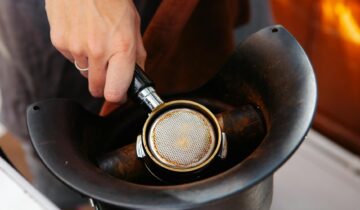
- Tamper: A heavy, flat-bottomed tool used to compress the coffee grounds into a dense, level “puck” inside the portafilter. Even pressure is crucial for preventing channeling, where water finds an easy path and under-extracts the coffee.
- Milk frothing pitcher: A stainless steel pitcher is essential for steaming milk. Its shape helps create a swirling vortex to incorporate air, and the metal allows you to feel the temperature of the milk with your hand.
The supporting cast: Water and key accessories
You can have the best beans, grinder, and brewer in the world, but a few overlooked details can still hold your coffee back. Paying attention to these supporting elements is what separates good home coffee from a truly professional-quality cup. It’s about controlling every variable you can, from the water you use to how you store your beans.
First, let’s talk about water. Coffee is over 98% water, so its mineral content has a massive impact on flavor extraction. Using very hard tap water can lead to scale buildup in your equipment and mute a coffee’s delicate flavors. Conversely, using pure distilled water will result in a flat, lifeless cup because it lacks the minerals needed to bond with and extract the tasty compounds from the coffee. The ideal solution for most people is simple: use a basic carbon filter pitcher. For those wanting to go deeper, you can create your own ideal coffee water by adding mineral packets (like Third Wave Water) to distilled water.
Finally, consider your accessories and storage. As mentioned, a gooseneck kettle is essential for pour-over, but a variable temperature kettle is an upgrade for any brewing method. Different roast levels extract best at different temperatures, and this tool gives you ultimate control. For storage, always buy whole beans and store them in an airtight, opaque container away from heat and light. Oxygen is the enemy of fresh coffee, so grinding right before you brew will preserve the bean’s delicate aromatic compounds and ensure the best possible flavor.
| Tool Category | Beginner Essential | Recommended Upgrade |
| Grinder | Burr Grinder (Hand or Electric) | Espresso-specific Grinder |
| Measurement | Digital Scale (0.1g) | Scale with a built-in timer |
| Water Heating | Standard Kettle | Gooseneck / Variable Temp Kettle |
| Brewer | French Press or AeroPress | Pour-Over Setup (V60/Kalita) |
| Espresso | N/A | Entry-level Espresso Machine |
| Accessories | Airtight Storage Container | Tamper, Milk Pitcher, WDT Tool |
| Water | Filtered Tap Water | Custom Mineralized Water |
Building your home cafe is a rewarding process of discovery. It’s not about buying everything at once, but about making smart, incremental investments in quality tools. As we’ve discussed, the journey begins with a solid foundation: a consistent burr grinder and a precise digital scale. From there, you can choose a brewing method like the forgiving French press or versatile AeroPress that suits your taste and lifestyle. As your skills and passion grow, you can explore the nuanced world of pour-over or take on the rewarding challenge of making true espresso. By focusing on the fundamentals and controlling key variables like water and storage, you empower yourself to create exceptional coffee every day, turning your kitchen into your favorite cafe.
Image by: Belu Montero @obradebelu
https://www.pexels.com/@obradebelu
 No products in the cart.