

The Gaggia Classic Pro is revered for its straightforward design and capability to produce high-quality espresso. However, its manual nature means the user is responsible for numerous variables that can lead to disappointing results. One of the most common issues is a weak, watery, or sour shot. This article provides a systematic guide for experienced home baristas to diagnose and resolve the root causes of weak espresso from their Gaggia machine. We will explore the critical variables, from coffee preparation to machine parameters, offering a clear, technical framework for improving shot quality and consistency.
Diagnosing the grind and dose
The primary suspect in a weak espresso shot is almost always the coffee grind or dose. When espresso tastes watery or thin, it is a classic sign of underextraction. This occurs when water flows through the coffee puck too quickly, failing to dissolve the necessary coffee solids. The first step is to assess your grind size. If it is too coarse, water will encounter little resistance and channel through the puck, resulting in a fast-flowing, pale shot. Adjust your grinder to a finer setting to increase the surface area of the coffee grounds, which slows down the water flow and allows for a more complete extraction.
Equally important is the dose, or the amount of ground coffee in the portafilter basket. An insufficient dose leaves too much headspace between the coffee surface and the shower screen, which can lead to a soupy puck and an uneven extraction. Ensure you are using an appropriate dose for your basket size, typically between 16 to 18 grams for a standard double basket. Using a gram scale to measure your dose is essential for consistency. A proper dose creates a dense, stable puck that can withstand the pressure of the brew water, promoting a uniform and rich extraction.
Tamping and distribution technique
Even with the correct grind and dose, improper puck preparation can compromise shot quality. Distribution refers to the evenness of the coffee grounds within the portafilter basket. Clumps or uneven density create paths of least resistance for the water, a phenomenon known as channeling. This leads to simultaneous overextraction in some areas and underextraction in others, producing a weak and often sour shot. Before tamping, use a distribution tool or the simple technique of tapping the side of the portafilter to settle the grounds evenly.
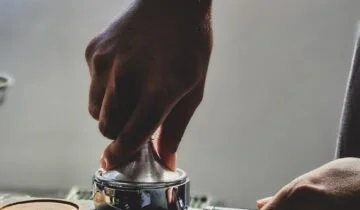
Tamping compacts the grounds into a solid puck, providing the necessary resistance for proper extraction. While the exact force is less critical than consistency, it is crucial to tamp on a level surface and apply firm, even pressure. An uneven or tilted tamp will encourage channeling, just as poor distribution does. The goal is to create a uniformly dense coffee bed that forces water to saturate the grounds evenly, ensuring a balanced extraction and preventing a thin-bodied shot.
Verifying brew temperature and pressure
The Gaggia Classic Pro, in its stock form, operates at a high pressure, often well above the 9-bar standard considered optimal for espresso. This excessive pressure can force water through the puck too quickly, contributing to underextraction and a weak flavor profile. While a pressure modification is a more involved step, it is a common adjustment for users seeking to refine their machine’s performance. Without modification, a finer grind is often necessary to provide enough resistance to compensate for the high pressure.
Brew temperature is another critical factor. The Gaggia’s uninsulated boiler can experience significant temperature swings. Brewing with water that is too cool will result in a sour, underextracted shot. A simple technique known as temperature surfing can help manage this. This involves running a specific amount of water through the group head to purge overheated water and then timing the shot to coincide with the boiler’s heating cycle reaching the desired temperature range. Consistent temperature management ensures that the coffee solubles are extracted efficiently, leading to a richer and more complex flavor.
Machine maintenance and water quality
A poorly maintained machine can be an overlooked cause of weak espresso. Over time, coffee oils and mineral scale can build up on the shower screen, in the group head, and within the boiler. This buildup can obstruct water flow and introduce off-flavors, negatively impacting shot quality. Regular backflushing with a specialized detergent is essential to remove coffee residue. Descaling the machine according to the manufacturer’s recommendations is also critical, especially in areas with hard water, as scale buildup can impair heating element performance and affect brew temperature stability.
Water quality itself plays a direct role in extraction. Water that is too soft may not have enough mineral content to extract the desirable flavor compounds from the coffee, resulting in a flat or weak taste. Conversely, excessively hard water leads to rapid scale buildup. Using filtered water with a balanced mineral composition provides the best foundation for a flavorful and well-extracted espresso. Ensuring your Gaggia is clean and supplied with appropriate water is a foundational step for consistent results.
Achieving consistently rich and flavorful espresso from a Gaggia machine is a matter of methodical attention to detail. Weak shots are most often a result of underextraction, caused by a grind that is too coarse, an improper dose, or poor puck preparation. By systematically evaluating and adjusting these variables, users can eliminate channeling and ensure a balanced, even flow of water through the coffee bed. Furthermore, understanding the impact of brew temperature and pressure, alongside diligent machine maintenance, provides a comprehensive framework for troubleshooting. Mastering these elements transforms the manual espresso process from a source of frustration into a rewarding craft. For those looking to refine their technique, a range of precision tools is available at papelespresso.com.
 No products in the cart.