

The ultimate morning workflow for Gaggia Classic owners
The Gaggia Classic has earned its place as a capable, yet demanding, single-boiler espresso machine. For the experienced home barista, its manual nature is not a limitation but an invitation to engage deeply with the craft. Achieving consistent, high-quality espresso requires more than just good coffee; it demands a repeatable and precise workflow. This guide outlines a structured morning routine designed to manage the machine’s thermal characteristics and unlock its full potential. By focusing on a systematic approach to preparation, brewing, and steaming, users can move beyond variability and produce exceptional espresso with confidence. The goal is not speed, but a methodical process that respects the variables at play.
1. Machine preparation and thermal stability
The first and most critical step in any Gaggia Classic workflow is achieving thermal stability. The machine’s compact aluminum boiler and exposed group head are susceptible to temperature fluctuations. A cold portafilter or group head will rob the brew water of heat, leading to sour, under-extracted shots. To begin, turn the machine on at least 20 minutes before you intend to pull your first shot. Lock the portafilter into the group head during this warm-up period to ensure it reaches the same temperature as the rest of the assembly.
Once the machine’s ready light indicates it has reached temperature, it is good practice to flush water through the group head and steam wand. This purge helps stabilize the boiler temperature and pre-heats the internal water pathways. Run a few ounces of water through the group head with the portafilter in place, and briefly open the steam valve to clear any condensed water. This simple habit establishes a stable thermal baseline for the work ahead.
2. Puck preparation for consistency
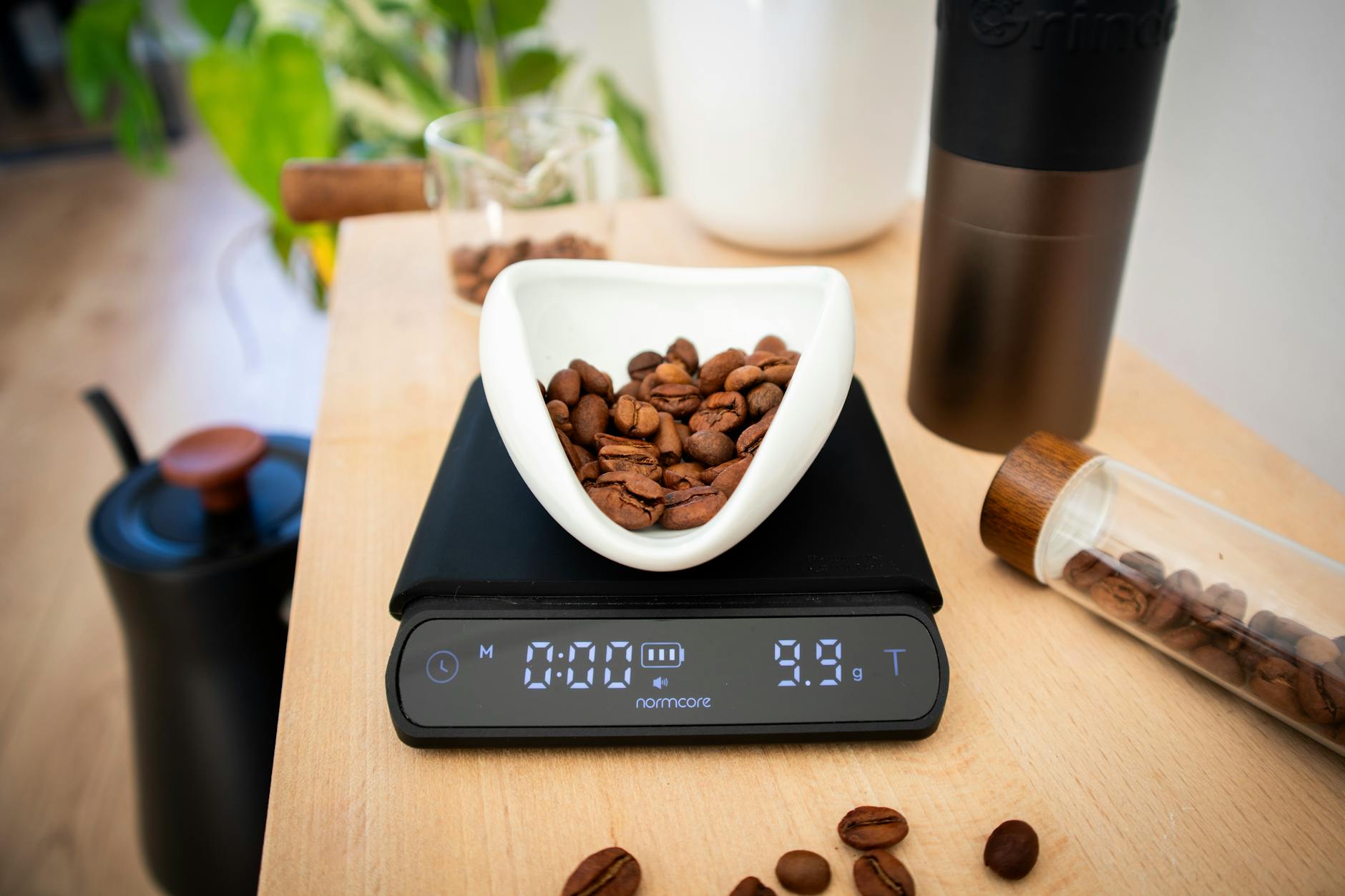
With a thermally stable machine, attention turns to the coffee itself. Puck preparation is a sequence of precise actions aimed at creating a uniform coffee bed, which is essential for preventing channeling and ensuring an even extraction. Start by weighing your dose of freshly roasted coffee beans. For a standard double basket, a dose between 14 and 18 grams is typical, but this should be adjusted based on the specific coffee and basket being used.
After grinding, the coffee grounds must be distributed evenly in the portafilter basket. Clumping is a common issue, and simply leveling the grounds with a finger is often insufficient. A distribution tool can be used to break up clumps and settle the grounds into a homogenous layer. Following distribution, a firm and level tamp is required. The goal of tamping is not to press as hard as possible, but to compact the coffee into a level cake of uniform density. Apply consistent pressure until the coffee bed stops compressing. A crooked tamp is a primary cause of channeling, so ensure the tamper is perfectly parallel to the rim of the basket.
3. Temperature surfing and shot execution
The Gaggia Classic operates with a simple thermostat that creates a temperature cycle, meaning the brew water is not always at the ideal temperature. “Temperature surfing” is a technique used to start the extraction at a consistent point within this cycle. Since the heating element turns off once the boiler reaches its target temperature, the water will begin to cool. A common method is to initiate the brew cycle a few seconds after the heating element light turns off, providing a more predictable starting temperature.
To do this, turn on the brew switch with an empty cup underneath the group head. Watch for the ready light to turn off, which signals the heating element has engaged. When the light turns back on, the boiler is at the top of its temperature range. At this point, turn the brew switch off. Immediately prepare your portafilter, lock it in, and place your scale and cup. Start your shot; the timing will depend on your coffee and desired ratio. This method helps mitigate the wide temperature swings of the machine’s thermostat, leading to more repeatable extractions.
| Parameter | Typical Range | Purpose |
|---|---|---|
| Dose | 14–18g | Sets the amount of soluble material available for extraction. |
| Yield | 28–36g | Determines the strength and concentration of the espresso. |
| Time | 25–32 seconds | Influences the overall extraction level of the coffee. |
4. Milk texturing and workflow integration
For milk-based drinks, steaming must be integrated seamlessly into the workflow. As a single-boiler machine, the Gaggia Classic cannot brew and steam simultaneously. After pulling your espresso shot, you must switch the machine into steam mode, which raises the boiler temperature significantly. Wait for the ready light to indicate that steam temperature has been reached.
Before steaming, purge the steam wand to expel any residual water. Submerge the tip just below the surface of the milk and open the steam valve fully. Incorporate air for the first few seconds to create foam, then submerge the wand deeper to heat the milk with a swirling vortex. Once the pitcher is hot to the touch, turn off the steam. It is critical to clean the wand immediately with a damp cloth and purge it again to prevent milk residue from being drawn back into the boiler. After steaming, it is equally important to cool the boiler back down to brew temperature by running water through the group head before pulling another shot.
Conclusion
Mastering the Gaggia Classic is a rewarding endeavor that hinges on a disciplined and repeatable workflow. The key to consistency lies in managing the machine’s thermal behavior through a dedicated warm-up routine and the practice of temperature surfing. Precision in puck preparation, from dosing to tamping, is non-negotiable for preventing channeling and achieving a balanced extraction. Finally, integrating milk steaming into the process requires a methodical approach to temperature management. By embracing these technical details, the home barista can transform this capable machine into a tool for consistently producing exceptional espresso. For those looking to refine their technique, a range of precision tools can be found at retailers like papelespresso.com.
 No products in the cart.