

# Why your Gaggia espresso shots are sour and how to fix them
Achieving a balanced espresso shot on a manual machine like a Gaggia Classic Pro is a pursuit of precision. When a shot tastes sour, it is a clear diagnostic sign of underextraction. This sharpness, often described as acidic or lemony, occurs when the brewing process fails to dissolve the full spectrum of soluble compounds from the coffee grounds. For the experienced home barista, understanding the mechanics of extraction is fundamental to diagnosing and correcting this common issue. This article will explore the primary causes of sour shots in Gaggia machines—from grind size and brew temperature to puck preparation—providing the technical insights needed to pull consistently balanced and sweet espresso.
Understanding underextraction
The taste of a sour espresso is a direct result of chemical composition. Coffee contains a complex array of acids, sugars, lipids, and other organic compounds that dissolve at different rates during brewing. The initial compounds to dissolve are the organic acids, which are responsible for the bright, acidic notes in coffee. As the extraction continues, sugars and other long-chain molecules begin to dissolve, creating sweetness and body that balance the initial acidity. Bitterness typically comes at the very end of the extraction process.
A sour shot is one where the brewing process was halted too early, either in total time or in efficiency. The water passed through the coffee grounds, primarily dissolving the fast-extracting, sour-tasting acids without reaching the compounds responsible for sweetness and balance. Therefore, diagnosing a sour shot is synonymous with identifying the variables that are causing this premature or inefficient extraction.
Grind size and contact time
The most common culprit behind a sour espresso shot is a grind size that is too coarse. The total surface area of the coffee grounds dictates how much resistance the water encounters and, consequently, the total contact time. When the grind is too coarse, the water flows through the coffee puck too quickly, a phenomenon known as a “gusher.” This rapid flow does not allow sufficient time for the water to dissolve the desirable sugars and other compounds that offset the initial acidity.
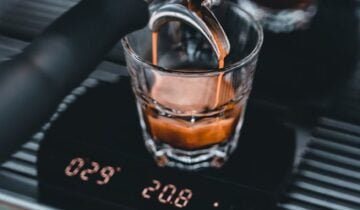
For Gaggia users, dialing in the grind is a process of iterative adjustment. A shot that runs in under 20 seconds is a strong indicator that the grind is too coarse. The goal is to find a grind setting that provides enough resistance to achieve a target extraction time, typically between 25 and 35 seconds for a standard 1:2 brew ratio (e.g., 18 grams of coffee yielding 36 grams of liquid espresso). Adjusting the grinder to a finer setting increases the total surface area of the coffee particles, slowing down the water flow and increasing contact time, which allows for a more complete extraction.
Brew temperature and solubility
Water temperature plays a critical role in the solubility of coffee’s chemical compounds. Brewing with water that is too cool will result in a significant lack of extraction, as the water lacks the thermal energy needed to dissolve the sugars and deeper flavor compounds effectively. This leaves the more easily soluble acids as the dominant taste in the final cup, producing a distinctly sour flavor.
Stock Gaggia machines are regulated by a simple bimetallic thermostat, which can lead to significant temperature fluctuations, known as “temperature surfing.” The boiler might be at an ideal temperature at one moment and several degrees too cool just a minute later. To achieve thermal stability, many users learn to “temperature surf” by timing their shot relative to the boiler’s heating cycle. Activating the steam switch for a few seconds before brewing can force the boiler to heat up, allowing the user to start the extraction as the water reaches a more optimal and consistent temperature, often recommended to be between 90-96°C (195-205°F).
Puck preparation and channeling
Even with the correct grind size and temperature, poor puck preparation can lead to localized underextraction. Channeling occurs when water finds a path of least resistance through the coffee puck, over-extracting the coffee along that channel while leaving other parts of the puck almost entirely untouched. This uneven flow results in a shot that is simultaneously sour (from the underextracted sections) and bitter (from the over-extracted channel). The overall effect is often a thin, weak, and acidic cup.
To prevent channeling, meticulous puck preparation is essential. Start with an even distribution of grounds in the portafilter. This can be achieved by gently tapping the side of the portafilter or using a dedicated distribution tool. A level and consistent tamp is equally important. The goal is to create a homogenous puck of uniform density, ensuring that the water flows through it evenly. Any cracks, fissures, or areas of lower density are potential sites for channeling to begin.
Conclusion
A sour espresso from a Gaggia machine is not a sign of a flawed device but rather a precise indicator of underextraction. By methodically addressing the core variables of the brewing process, any barista can overcome this issue. The solution lies in a systematic approach: ensuring the grind is fine enough to provide adequate resistance and contact time, managing the machine’s thermal behavior to maintain a sufficiently high brew temperature, and preparing the coffee puck with care to promote an even, channel-free extraction. Mastering these elements transforms the brewing process from a game of chance into a controlled, repeatable craft. For those looking to refine their technique, various tools and accessories are available at papelespresso.com to aid in achieving greater consistency.


 No products in the cart.