


Diagnosing leaks in upgraded PTFE tubes and fittings
Upgrading to PTFE (polytetrafluoroethylene) tubing is a common modification for manual espresso machine owners seeking greater temperature stability and a cleaner water path. While these systems offer significant advantages over standard silicone or PVC tubes, they are not immune to leaks. A leak, however small, can compromise pressure, affect shot consistency, and potentially damage your machine over time. For the experienced home barista, understanding how to systematically diagnose and resolve these leaks is a crucial skill. This article provides a technical guide to identifying the root causes of leaks in PTFE tubing and fittings, ensuring your machine operates with precision and reliability.
Understanding pressure and temperature dynamics
PTFE is a resilient material, but its physical properties respond to changes in temperature and pressure. During the heat-up cycle of an espresso machine, both the tubing and the connected components—often brass or stainless steel—expand. These materials have different coefficients of thermal expansion, meaning they expand and contract at different rates. This differential can create minute gaps that may not be present when the machine is cold. A fitting that appears perfectly secure at room temperature might reveal a slow drip once the machine reaches its operating temperature of 90-96°C. Similarly, the jump to nine bars of pressure during an extraction places significant stress on all connection points. A leak may only manifest under full pressure, making it invisible during a static check.
Systematic inspection for leak sources
When you suspect a leak, a systematic approach is more effective than random checks. Start by ensuring the machine is unplugged and has cooled down completely. First, conduct a thorough visual inspection. Look for obvious signs of moisture, mineral deposits (scale), or corrosion around each fitting. Pay close attention to the point where the tube enters the fitting, as this is a common failure point.
If a visual check reveals nothing, the next step is a static pressure test. For lever machines, this can often be done by lifting the lever to fill the chamber and holding it just before engagement, which pressurizes the system. For other manual machines, you may need to engage the pump or piston briefly. Use a dry paper towel to wipe each connection point and observe for any signs of moisture. Check the following key areas:
- The connection from the boiler to the group head.
- Fittings at any T-junctions or distributors.
- The point of entry into the group head assembly.
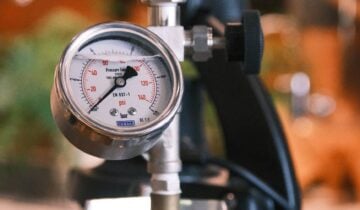
- Connections at the pressure gauge, if applicable.
Common causes of fitting and tube failures
Leaks in PTFE systems can often be traced back to a few common issues, most of which relate to installation or wear. One of the most frequent errors is improper tube cutting. For a ferrule or compression fitting to seal correctly, the end of the PTFE tube must be perfectly square and free of burrs. A crooked cut, even by a small margin, creates an uneven surface that prevents the fitting from seating uniformly, providing a path for water to escape under pressure.
Over-tightening fittings is another prevalent problem. It is a misconception that a tighter connection is always better. Over-torquing a compression fitting can deform the brass or stainless steel ferrule, crush the PTFE tubing, and compromise the seal. The fitting should be tightened just enough to be snug, followed by a small additional turn—often a quarter-turn is sufficient. Lastly, repeated disassembly and reassembly can cause wear on both the tube end and the fitting’s ferrule, eventually leading to a poor seal.
Best practices for installation and maintenance
Preventing leaks begins with proper installation. Always use a dedicated, sharp tube cutter designed for plastic tubing to ensure a clean, square cut. When inserting the tube into a compression fitting, make sure it is fully seated against the internal stop before tightening the nut. This ensures the ferrule compresses at the correct location on the tube.
For maintenance, periodically inspect all connections, especially if you move your machine or perform other modifications. If you must disconnect a tube, inspect the end for any signs of deformation or scoring. If damage is visible, it is best to trim a small section off the end and start with a fresh surface. Keeping a log of maintenance and observing any changes in machine performance can help you anticipate potential issues before they become significant problems. A disciplined and precise approach is key to a leak-free system.
Conclusion
Diagnosing leaks in a high-performance PTFE tubing system requires a methodical approach that accounts for the interplay of temperature, pressure, and mechanical stress. By understanding the common failure points—such as improper tube cutting, over-tightening, and material wear—users can move from guesswork to precise problem-solving. A systematic inspection, first visual and then under pressure, will almost always reveal the source of the issue. Ultimately, prevention through careful installation and regular maintenance is the most effective strategy for ensuring a reliable, leak-free manual espresso machine. For those who maintain their own equipment, sourcing the correct tools and components is an important part of the process, and dedicated suppliers like papelespresso.com can be a useful resource for quality parts.


 No products in the cart.