

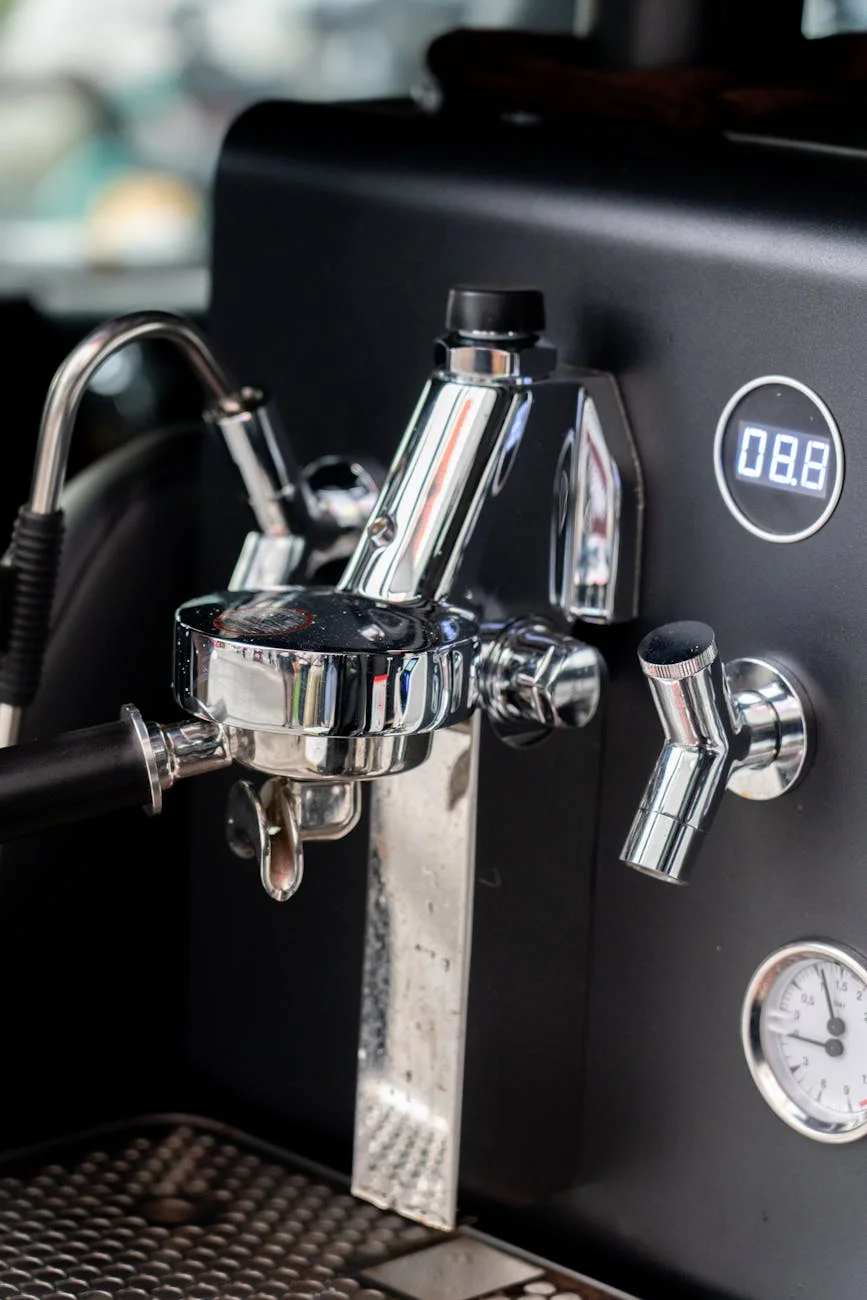
Troubleshooting unstable pressure readings in your modded Gaggia
Adding a pressure gauge to a Gaggia Classic or similar machine is a popular modification that transforms it into a powerful tool for manual espresso profiling. It provides direct visual feedback on the pressure being applied to the coffee puck, allowing for pre-infusion, pressure ramping, and declining profiles. However, this valuable data is only useful when it is accurate and stable. A fluctuating or erratic pressure reading can be frustrating, making it difficult to diagnose shots or repeat successful extractions. Understanding the common causes of this instability is the first step toward achieving consistent, predictable control over your espresso, ensuring your modifications deliver on their full potential.
Verifying the gauge and its installation
The first area to investigate is the physical installation of the pressure gauge itself. In most modifications, the gauge is connected to the brew path via copper or PTFE tubing and compression fittings. An unstable reading can often be traced back to a simple mechanical issue in this assembly. A loose connection at the gauge, the T-fitting, or any other junction can introduce slight vibrations or even tiny air leaks that cause the needle to flutter. Over-tightening these fittings can be just as problematic, potentially damaging the threads or ferrules and creating an improper seal.
Begin by carefully inspecting all connection points from the boiler or pump outlet to the gauge. Check for any signs of moisture, indicating a slow leak. Gently ensure each fitting is snug but not forced. It is also important to inspect the tubing itself. A sharp bend or kink in the line can restrict the hydraulic connection to the gauge, leading to delayed or inaccurate readings. The goal is to ensure a secure, sealed, and unobstructed path for water pressure to travel from the group head to the gauge’s sensor.
The impact of air in the hydraulic system
One of the most common culprits behind a “spongy” or bouncy pressure reading is air trapped within the hydraulic system. Because water is practically incompressible, it transmits pressure directly and instantly. Air, on the other hand, is highly compressible. When pockets of air are present in the boiler, tubing, or group head, they act like tiny shock absorbers. As the pump builds pressure, these air pockets compress, causing the gauge needle to bounce or fluctuate before settling. This can make precise pre-infusion control nearly impossible.
Air typically enters the system after it has been drained for maintenance, if the water tank runs empty, or through a compromised seal. The solution is to thoroughly bleed the system. This is done by running the pump with the steam wand valve open until a solid, sputtering-free stream of water emerges. Follow this by running a significant amount of water through the group head with no portafilter in place to purge any remaining air from the brew path.
Analyzing pump performance and the over-pressure valve
If the physical installation is secure and the system is free of air, the next components to examine are the vibration pump and the over-pressure valve (OPV). A standard vibration pump naturally produces a pulsatile output, which can translate to a very fine, rapid vibration of the gauge needle. This is normal behavior. However, large, erratic swings in pressure may point to a failing pump that is struggling to deliver consistent flow.
More frequently, the OPV is the source of instability. The OPV is designed to vent excess pressure to maintain a set maximum, but a faulty valve can cause significant fluctuations. Debris such as scale or coffee grounds can prevent the valve’s seal from seating properly, causing a slow but steady pressure drop during extraction. In other cases, the OPV spring can “chatter” as it rapidly opens and closes near its pressure limit, creating an oscillating reading on the gauge. To diagnose this, disassemble and inspect the OPV for debris or wear on the seal and spring.
How puck dynamics affect pressure stability
It is crucial to differentiate between instability caused by the machine and instability caused by the coffee puck itself. The espresso machine generates water flow, but it is the resistance of the finely ground coffee that builds pressure. Problems with puck preparation are a frequent cause of perceived pressure instability. Severe channeling, where water punches a hole through the puck, will manifest as a sharp drop in pressure on the gauge as water finds an easy exit path. This is a puck failure, not a machine failure.
To isolate the machine for testing, use a blind basket (a portafilter basket with no holes). This completely closes the system, allowing the pump to build to its maximum pressure as set by the OPV. If the pressure reading is stable and steady with the blind basket but fluctuates when pulling a shot, the issue lies with your grinding, distribution, or tamping technique. Achieving a stable reading with a blind basket confirms the hydraulic integrity of the machine itself.
In conclusion, a fluctuating pressure gauge on a modded Gaggia is a solvable problem that requires a systematic approach. By first verifying the integrity of the gauge’s physical installation and ensuring the hydraulic circuit is completely bled of air, you can eliminate the most common and simple causes. From there, using a blind basket allows you to isolate the machine’s behavior from the variables of puck preparation, pointing you toward either your technique or hardware like the OPV. This methodical process empowers you to diagnose the root cause accurately, restoring the stable, reliable feedback needed for truly manual and controlled espresso extraction. For those looking to refine their setup, various precision components and tools are available from retailers like papelespresso.com.


 No products in the cart.