

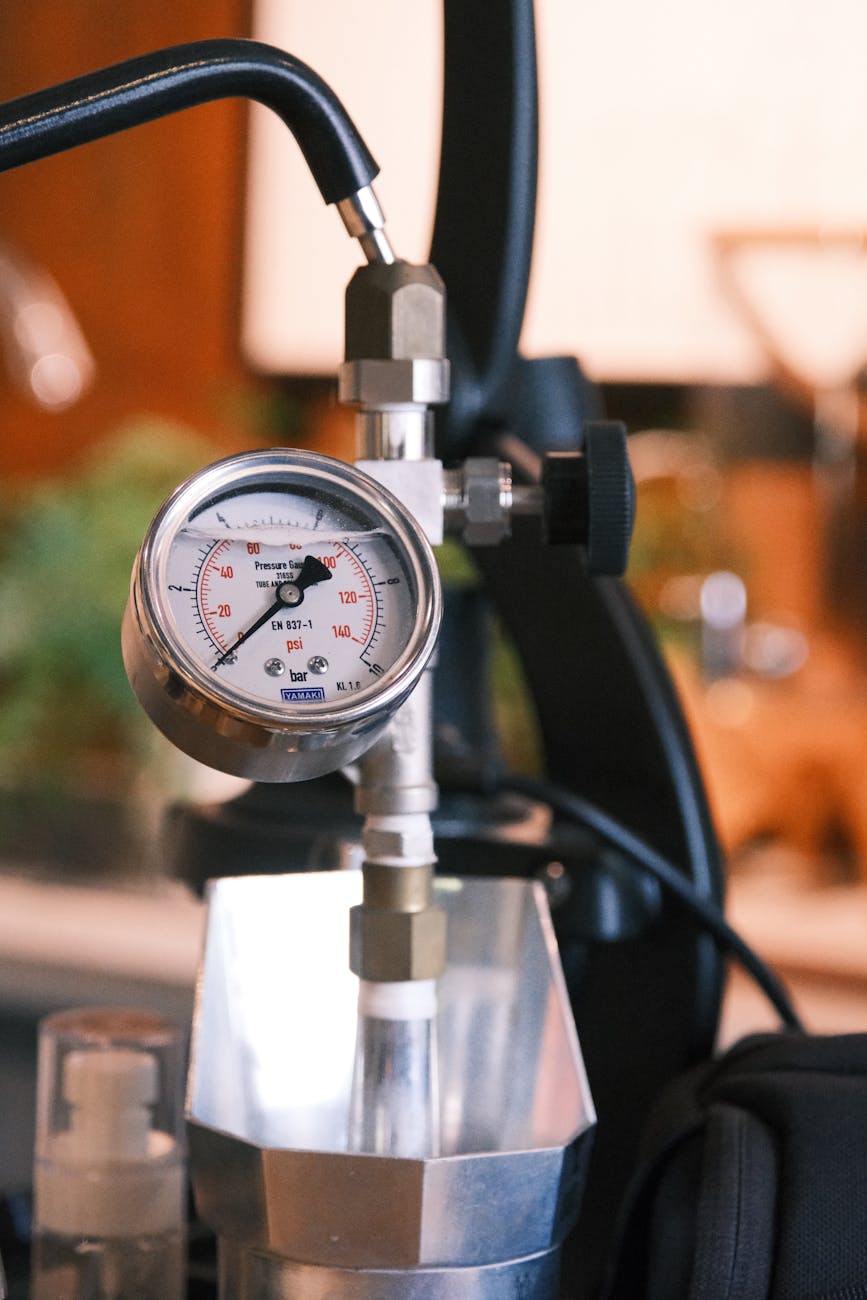
How pressure profiling can save a fast espresso extraction
A fast-flowing espresso shot is a common frustration for even the most seasoned home barista. It often points to an issue in puck preparation or grind size, typically resulting in an under-extracted, sour, and thin-bodied cup. While the immediate impulse is to discard the shot and adjust the grinder, this is not always the most practical or insightful solution, especially when dialing in a new coffee. For users of manual and advanced espresso machines, pressure profiling offers a powerful, real-time method to intervene. By actively manipulating the pressure applied to the coffee puck during the extraction, a barista can compensate for a potentially flawed setup, turning a likely failure into a palatable, and often educational, success.
Understanding the fast extraction
A “fast extraction” or “gusher” occurs when water flows through the coffee puck with insufficient resistance. The ideal espresso extraction requires water to pass through the ground coffee at a controlled rate, typically yielding a specific beverage ratio in about 25 to 35 seconds. When a shot runs too quickly, for instance, in under 20 seconds, it signifies that the water has not had adequate contact time with the coffee particles. This leads to under-extraction, a state where the desirable soluble compounds (sugars and organic acids) have not been fully dissolved, resulting in a flavor profile that is aggressively sour, salty, and lacking in sweetness, body, and complexity. The primary causes are often a grind size that is too coarse, an insufficient dose of coffee, or uneven tamping and distribution that creates channels for water to bypass the puck.
Introducing pressure profiling as a corrective tool
Pressure profiling is the deliberate manipulation of pump or lever pressure throughout the espresso extraction process. Traditional espresso machines often operate at a fixed pressure, typically set to around 9 bars. Machines equipped with pressure profiling capabilities, including manual lever machines and certain advanced pump-driven models, allow the user to vary this pressure from pre-infusion to the final moments of the shot. This control transforms the extraction from a static process into a dynamic one. Instead of being locked into a single pressure curve, the barista can adapt their approach based on how the extraction is behaving. In the context of a fast shot, this means you can apply specific pressure strategies to increase contact time and improve the extraction quality mid-pull, without needing to stop and change your grinder settings.
Techniques for slowing a fast shot
When you identify that a shot is flowing too quickly, several pressure profiling techniques can be employed to salvage it. The goal of these interventions is to slow the flow rate of water through the puck, thereby increasing contact time and promoting a more even extraction.
- Extended low-pressure pre-infusion: If you anticipate a fast shot, or notice it in the first few seconds, holding a long, low-pressure pre-infusion (e.g., 2–4 bars) can help. This allows the coffee puck to become fully saturated with water before high pressure is applied. A well-saturated puck swells and offers more resistance, which can help slow down the subsequent flow rate when you ramp up to full pressure.
- Reduced peak pressure: Instead of ramping up to a full 9 bars, a lower peak pressure of 7 or 8 bars can significantly slow the flow of water. Force is a key component of the flow rate equation; by reducing it, you inherently slow down the extraction. This is a direct and highly effective way to gain more contact time when you see the shot blonding prematurely.
- Declining pressure profile: A common technique to manage flow is to start at a standard peak pressure (e.g., 9 bars) and then gradually decrease the pressure as the shot progresses. If you notice the flow accelerating midway through, you can begin to ramp down the pressure earlier or more aggressively than you normally would. This tapering helps maintain a consistent, manageable flow rate as the puck naturally erodes and its resistance decreases during the extraction.
The sensory impact of in-shot corrections
While pressure profiling can save a shot from being a complete waste, it is important to understand that the resulting cup will differ from one that was dialed in perfectly from the start. A shot “saved” by lowering the peak pressure may have a softer, more rounded mouthfeel and less intense bitterness than a standard 9-bar extraction of the same coffee. The acidity might present differently, often being perceived as more integrated and less sharp. Using a declining profile to manage a fast flow can enhance sweetness and reduce astringency toward the end of the pull. These corrected shots are not just “drinkable” but offer a valuable sensory lesson. They teach the barista about how different extraction phases and pressure levels contribute to the final flavor, providing a deeper, more intuitive understanding of the coffee itself.
Conclusion
Pressure profiling provides an invaluable layer of control for the advanced home barista. It transforms a fast-flowing espresso shot from a simple failure into an opportunity for real-time problem-solving and learning. By understanding the causes of a fast extraction and applying techniques like extended pre-infusion, reduced peak pressure, or a declining profile, you can effectively increase coffee-and-water contact time and salvage the cup. The result is a more balanced extraction and, just as importantly, a deeper insight into how pressure dynamics shape the final flavor profile. While a perfect puck preparation is always the primary goal, the ability to adapt and correct mid-shot is a powerful skill. For those looking to explore these advanced techniques, a range of suitable manual espresso tools is available from papelespresso.com.
 No products in the cart.