

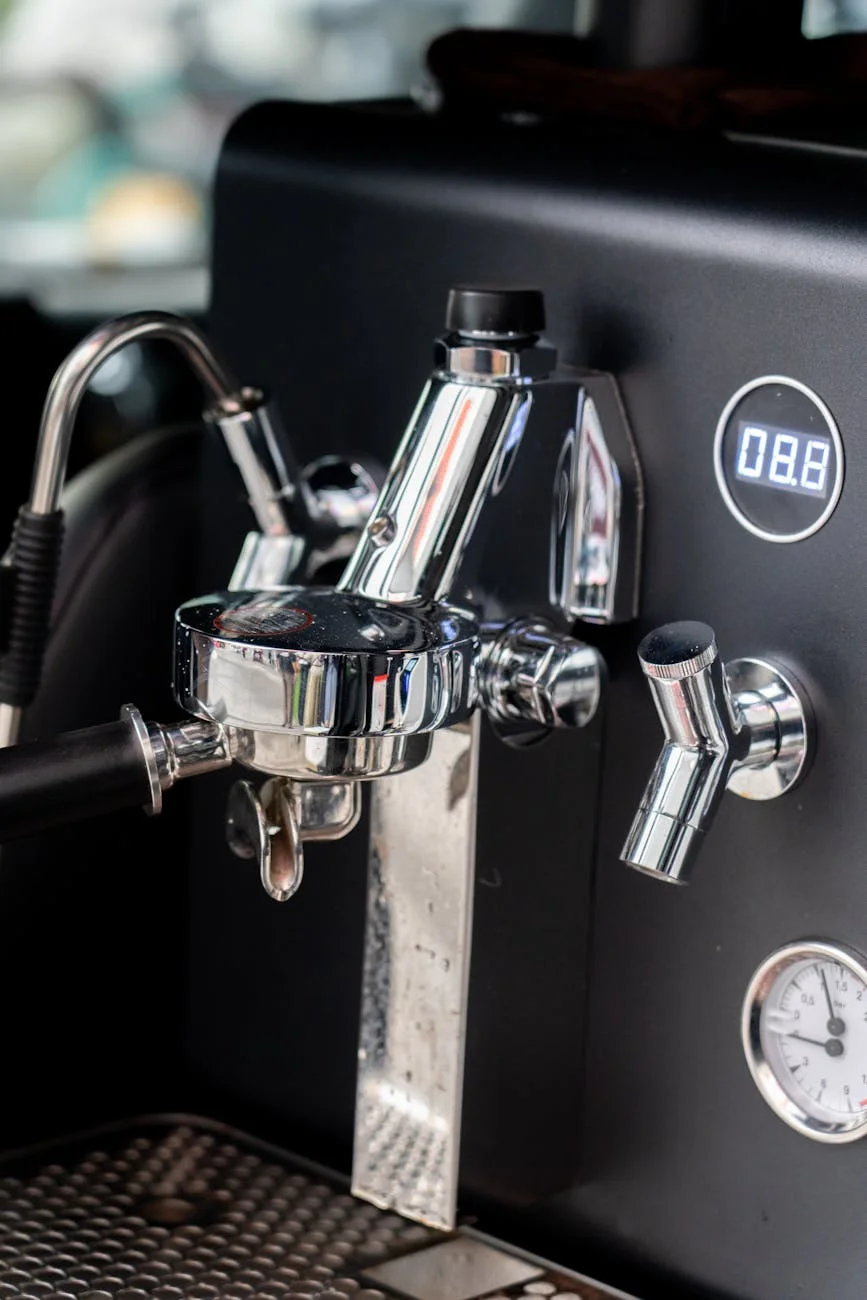
The pursuit of thermal stability is a defining goal for any barista seeking shot-to-shot consistency. While the Gaggia Classic platform is beloved for its simplicity and potential, its factory-installed thermostat operates with a wide temperature swing, making repeatable extractions challenging. Installing a PID (Proportional-Integral-Derivative) controller is a popular and effective modification that provides precise boiler temperature management. However, the precision of the PID is only as good as the information it receives. If the temperature sensor providing that information is not accurately calibrated to reflect the true temperature of the water hitting the coffee puck, the entire system’s value is diminished. This guide details the process for properly calibrating the temperature sensor in your modified Gaggia.
Why sensor accuracy is critical for espresso
A PID controller excels at holding a set temperature with minimal deviation, but it only knows the temperature at the specific point where its sensor is located—typically on the boiler wall or in the steam thermostat housing. This is not the same as the temperature of the water that flows through the grouphead and contacts the coffee. A significant temperature drop, or thermal offset, occurs as the water travels from the boiler to the puck. The magnitude of this offset depends on factors like sensor placement, ambient temperature, and the machine’s thermal stability.
Without calibration, setting your PID to 93°C does not guarantee the water exiting the shower screen is 93°C. It might be 89°C or 95°C, leading to under- or over-extraction. Calibrating the sensor involves measuring this offset and programming it into the PID. This adjustment synchronizes the temperature displayed on your PID with the actual brew water temperature, turning your controller into a tool for true, repeatable thermal management rather than just stable, arbitrary boiler heating.
Sensor types and optimal placement
Most Gaggia PID modifications utilize either thermocouples or Resistance Temperature Detectors (RTDs), with Pt100 or Pt1000 RTDs being common choices for their stability and accuracy within espresso brewing ranges. The physical placement of the sensor is the primary determinant of the thermal offset that you will need to measure. A sensor mounted directly into a drilled-and-tapped hole on the boiler provides a relatively direct reading of the boiler water mass. Another common method involves attaching the sensor to the exterior of the boiler wall, which introduces a slight lag and gradient. A third option is to place the sensor within the M4 threaded hole intended for the steam thermostat, which is convenient but may not be as representative of the bulk water temperature.
Regardless of the placement, the calibration goal remains the same: to establish a consistent, predictable relationship between the temperature the sensor reads and the temperature of the water at the point of extraction.
A practical guide to sensor calibration
Calibrating the sensor offset is a methodical process that requires a few basic tools and a stable machine. The objective is to measure the real-world temperature of water exiting the grouphead and compare it to the temperature reading at the PID simultaneously.
Required Tools:
- A Gaggia machine with a PID controller and sensor installed.
- A fast-reading, accurate digital thermometer.
- A bottomless (naked) portafilter.
- A polystyrene or other insulated cup.
Methodology:
- Stabilize the Machine: Turn on the machine and allow it to heat up for at least 30 minutes. Lock in the portafilter to ensure the entire brew path is at a stable operating temperature. Set the PID to a value that is well above your target brew temperature, such as 105°C, to begin the process.
- Prepare for Measurement: Place the insulated cup on your drip tray directly under the grouphead. Position the probe of your digital thermometer in the cup, ensuring it will be directly in the stream of water from the shower screen. Using a bottomless portafilter allows for easy and accurate probe placement.
- Measure the Water Temperature: Activate the pump to run water through the grouphead. Observe the reading on your digital thermometer. Wait for it to stabilize; this reading is your actual brew water temperature. Note this temperature.
- Calculate the Offset: Simultaneously, note the temperature displayed on your PID controller. The difference between the PID reading and your thermometer reading is the offset. For example, if your PID displays 105°C and your thermometer measures 93°C, your offset is -12°C.
- Program the Offset: Access your PID’s programming menu. Find the parameter for temperature offset (this may be labeled as “Offset,” “SC,” or a similar abbreviation depending on the PID model) and enter the negative value you calculated.
Verification and fine-tuning
Once the initial offset is programmed, you should verify its accuracy. Set your PID to a desired brew temperature, for example, 94°C. Allow the machine to stabilize at this new setpoint. Repeat the measurement process by running the pump and measuring the water temperature with your external thermometer. The reading should now be very close to the 94°C set on your PID. If it is slightly off, you can make small adjustments to the offset value in the PID settings until you are satisfied with the accuracy.
This calibrated offset bridges the gap between the boiler’s environment and the brew head’s reality. It ensures that when you dial in a specific temperature for a particular coffee, you are controlling the most critical variable—the water that extracts the shot.
Conclusion
Calibrating the temperature sensor is not an optional tweak but a fundamental step in realizing the full potential of a PID modification on a Gaggia machine. It elevates the system from a simple boiler stabilizer to an accurate instrument for controlling the extraction process. By methodically measuring the thermal offset between the sensor’s location and the grouphead, you ensure the temperature you set is the temperature you get. This process transforms your machine, providing the thermal precision necessary for achieving exceptional consistency and exploring the nuanced flavors of different coffees. For home baristas dedicated to refining their craft, taking the time to perform this calibration is an essential investment in control and quality.

 No products in the cart.