

Setting the perfect brew temperature for different coffee roasts
For the dedicated home barista, mastering manual espresso is a pursuit of precision. Every variable matters, from grind size to tamping pressure. Yet, among these factors, brew water temperature is one of the most critical and often misunderstood. The temperature at which water meets coffee grounds directly governs the rate and composition of extraction, profoundly influencing the final cup’s acidity, sweetness, and bitterness. For manual espresso users, who have a high degree of control over their equipment, understanding how to manipulate temperature is not just a technical exercise. It is a fundamental skill for unlocking the full potential of every coffee, roast by roast. This guide provides a technical framework for making informed temperature decisions.
The science of temperature in coffee extraction
At its core, brewing coffee is a process of chemical extraction. Hot water acts as a solvent, dissolving solids and oils from the coffee grounds to create the beverage. Temperature dictates the efficiency and selectivity of this process. Different compounds within the coffee bean—acids, sugars, oils, and other complex organic molecules—dissolve at different rates. Temperature is the primary catalyst controlling which compounds are extracted and in what proportion.
Generally, higher temperatures increase the solubility of most compounds. This means more of the coffee is extracted in less time. However, this is not a simple linear relationship. The desirable bright, fruity acids are highly soluble and extract early in the brew cycle, even at lower temperatures. Sugars, which contribute to sweetness and body, require more energy to dissolve. The compounds responsible for bitterness, such as certain phenols and caffeine derivatives, extract more readily at very high temperatures. Therefore, the goal is to find a temperature that achieves a balanced extraction, maximizing sweetness and desirable acidity while minimizing bitterness and sourness.
Matching temperature to roast level
The roast level of a coffee is the single most important factor when determining the ideal brew temperature. The roasting process fundamentally alters the bean’s chemical structure and physical density. A one-size-fits-all temperature will fail to do justice to the unique characteristics of different roasts.
- Light roasts: These beans are denser and less soluble because they have undergone less thermal degradation. Their cellular structure is more intact, making it harder for water to penetrate and extract the desirable compounds. To compensate, a higher brewing temperature, typically between 92–96°C (198–205°F), is required. This elevated temperature provides the necessary energy to properly extract the nuanced floral and acidic notes characteristic of light roasts without introducing excessive bitterness. Using too low a temperature will result in a sour, underdeveloped, and vegetal-tasting shot.
- Medium roasts: As beans are roasted longer, they become more porous and soluble. The sugars have been further caramelized, and the bright acids have mellowed. For medium roasts, a slightly lower temperature range of 90–94°C (194–201°F) is often optimal. This range is energetic enough to dissolve the caramelized sugars and achieve a balanced, sweet cup, but not so hot that it over-extracts the more delicate aromatics or introduces harsh, roasty flavors.
- Dark roasts: These beans are brittle, porous, and highly soluble. They have undergone significant chemical changes, with most of the original acids broken down and a higher concentration of bitter-tasting compounds. The primary goal here is to avoid over-extraction. A lower brewing temperature, generally between 88–92°C (190–198°F), is recommended. This gentler temperature helps to dissolve the rich, soluble solids and oils responsible for the classic deep, chocolatey, and nutty notes while mitigating the extraction of the bitter, ashy flavors that can easily dominate a dark roast.
Practical thermal management for manual machines
Applying these principles to a manual espresso machine requires a focus on thermal stability. Unlike commercial machines with large, heated group heads, many manual levers and presses are more susceptible to temperature fluctuations. Consistent preheating is non-negotiable. The entire brew path—from the portafilter to the brew chamber—must be brought up to a stable temperature to avoid heat loss during the shot, a phenomenon known as thermal sinking.
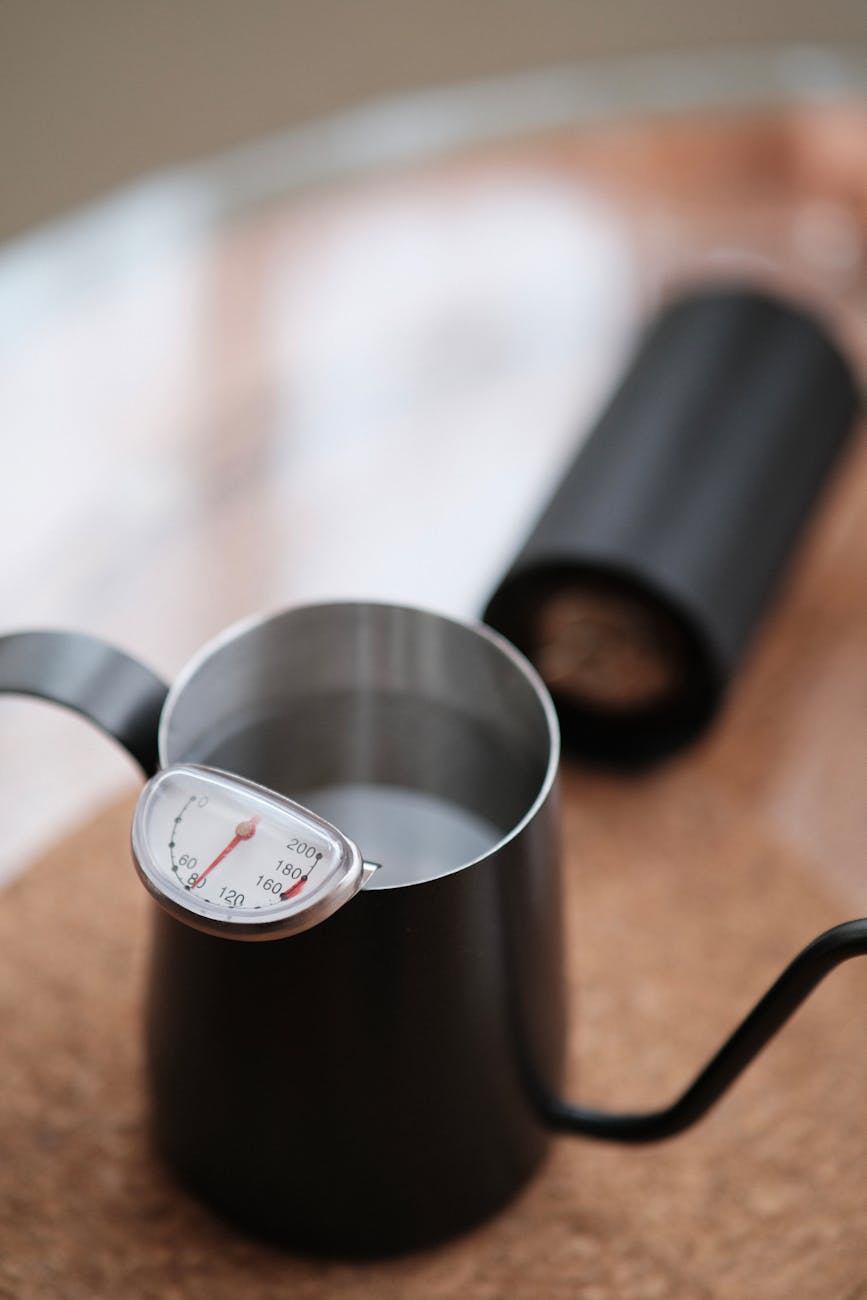
This involves flushing the group with hot water one or more times before locking in the portafilter. For machines with open kettles, monitoring the water with a reliable thermometer is essential. The temperature in the kettle is not the temperature at the puck. There will always be some degree of heat loss as the water travels to the coffee. Experienced baristas learn to develop a feel for their specific machine’s thermal characteristics, creating a repeatable pre-shot routine that leads to consistent brew temperatures. This is where meticulous preparation becomes key to translating theory into practice.
Conclusion
Mastering brew temperature is an essential step toward achieving exceptional espresso. It moves the barista from simply following a recipe to making intentional, informed decisions based on the specific coffee being used. By understanding the fundamental relationship between temperature, solubility, and roast level, you can adapt your technique to highlight the best qualities of any bean. The ideal temperature is not a single number but a dynamic variable that rewards careful management. For dark roasts, a lower temperature prevents bitterness. For light roasts, a higher temperature is necessary to unlock their complex acidity. Ultimately, consistent preheating and methodical experimentation are the keys to thermal control. A deeper understanding of these principles, combined with the right preparation, allows for a more precise and rewarding brewing experience, and relevant tools to assist in this process can be found at papelespresso.com.


 No products in the cart.