

Exploring the anatomy of the Gaggia Anima brew mechanism for better espresso
For the dedicated manual espresso enthusiast, the world of super-automatic machines can seem distant and uninteresting. We thrive on the tactile feedback of grinding, the careful distribution of grounds, and the precise art of tamping. Yet, understanding the engineering behind an automated system like the Gaggia Anima offers a unique and valuable perspective. By deconstructing its brew mechanism, we can gain a deeper appreciation for the variables we control by hand. This exploration is not about replacing manual skill but enhancing it, revealing how core espresso principles are solved through mechanical design. Analyzing this machine’s anatomy provides a fresh lens through which to view our own daily rituals of espresso preparation.
The core of the system: the removable brew group
Unlike semi-automatic machines that use a portafilter, the Gaggia Anima’s functionality is centered around a self-contained, removable brew group. This integrated unit is responsible for receiving ground coffee, tamping it, brewing, and ejecting the spent puck. For a manual user, this is akin to combining the grinder, distribution tool, tamper, and portafilter into a single automated device. The primary engineering goal of this design is consistency. By enclosing the entire process, the machine minimizes variables like dose weight, tamp pressure, and water temperature fluctuations that a barista must diligently manage. The group is primarily constructed from durable plastics and stainless steel components, engineered for thermal stability within its operational range, though it differs significantly from the heavy brass or steel of an E61 group head.
From bean to puck: dosing and tamping mechanics
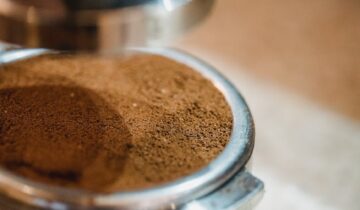
The Anima’s process begins with its integrated ceramic burr grinder. The machine doses coffee volumetrically or by time, a common method in automated systems. While less precise than weighing each dose, it is calibrated to deliver a consistent amount for the machine’s internal parameters. After the grounds are delivered into the brew chamber, a mechanical tamping system engages. This is not a high-pressure tamp like a manual one. Instead, it applies a light, consistent pressure designed to level the grounds and create a puck of uniform density suitable for the machine’s brewing pressure. For the manual user, this highlights the absolute necessity of a level and evenly distributed bed of coffee; the machine achieves its consistency not through force, but through repeatable, albeit gentle, mechanics.
Water delivery and pre-infusion
Once the puck is formed, the Anima begins the brewing cycle. The machine utilizes a small, efficient thermoblock for rapid heating. Water is forced through a shower screen at the top of the brew chamber. One of the more interesting features in this context is the Gaggia Adapting System and its pre-infusion stage. The machine wets the puck with a small amount of low-pressure water for a brief period before applying full brewing pressure. This function, which manual baristas often control with meticulous care, is automated to settle the coffee bed and reduce the risk of channeling. It demonstrates the universal importance of pre-infusion for achieving a balanced extraction, whether performed by a sophisticated machine or a skilled hand.
Extraction dynamics and puck ejection
The brew chamber itself is a cylindrical piston system. As hot water is forced into the chamber, pressure builds, and the espresso is extracted through a spout with a crema-enhancing device. The internal pressure and flow rate are managed by the machine’s pump and internal logic, aiming for a steady extraction profile. After the shot is complete, the piston system retracts, and an ejection mechanism sweeps the compressed, spent puck into an internal dreg box. This final step is one of pure convenience, yet it serves as a reminder of the importance of a well-formed, dry puck as an indicator of a successful extraction, a sign that water flowed through the coffee uniformly rather than around it.
Conclusion
Deconstructing the Gaggia Anima brew group reveals a masterclass in engineering for consistency. Its design automates the essential steps of dosing, tamping, pre-infusion, and extraction within a closed system. For the manual espresso user, the key takeaway is not that automation is superior, but that the principles it’s built upon are fundamental. It underscores the immense value of our own careful, manual inputs: precise dose weighing, meticulous puck preparation, and controlled pre-infusion. The machine achieves its results through rigid repetition. We achieve ours through skill, sensory feedback, and a deeper understanding of the craft. Having the right manual tools to control these variables is essential, and quality equipment for this purpose can be found at retailers like papelespresso.com.
 No products in the cart.