

A technical guide to the Gaggia Anima aroma strength setting
For baristas accustomed to the granular control of manual and semi-automatic espresso machines, the interface of a super-automatic model like the Gaggia Anima can seem opaque. Features described with consumer-friendly terms often obscure the underlying mechanical process. The “aroma strength” setting, represented by a coffee bean icon, is a primary example. Understanding what this function physically adjusts is crucial for moving beyond default settings and achieving a quality of extraction that respects the coffee bean’s potential. This guide deconstructs the aroma strength setting, translating its function into the language of manual espresso preparation to empower users with greater control over their final cup.
Deconstructing the aroma strength mechanism
The Gaggia Anima’s aroma strength setting is not an abstract parameter that introduces an artificial flavor or scent. Its function is direct and mechanical: it controls the dose of coffee used for each brewing cycle. On the Anima, this is typically adjustable in five increments, often represented by one to five coffee beans on the display.
When you adjust this setting, you are modifying the run time of the built-in grinder.
- A lower setting (e.g., one bean) causes the grinder to operate for a shorter duration, dispensing a smaller mass of ground coffee into the brew unit.
- A higher setting (e.g., five beans) runs the grinder for longer, resulting in a larger dose.
In manual espresso terms, this is the direct equivalent of changing the gram-weight of coffee you would normally weigh out before grinding. It is the primary variable for controlling the ratio of coffee to water.
The interplay of dose and the fixed brewing environment
In a manual workflow, changing the dose often necessitates a corresponding adjustment in grind size to maintain a desired extraction time and flow rate. This is because a larger dose in the same size portafilter basket increases the density of the coffee puck, creating more resistance. The barista compensates by grinding slightly coarser to allow water to flow through effectively.
The Gaggia Anima operates within a more fixed environment. The machine’s brew group has a set volume, and its pump is programmed to deliver a consistent pressure and water volume. Therefore, adjusting the aroma strength (dose) has a direct and pronounced effect on extraction dynamics. Increasing the dose packs more coffee into the same physical space, which increases puck density and slows down the flow of water. This extends the contact time between water and coffee, generally leading to a higher extraction yield.
Calibrating the settings for optimal flavor
Understanding that aroma strength equals dose allows for a systematic approach to dialing in a new coffee, much like one would with a traditional setup. The goal is to balance the dose with the pre-set grind size to achieve a balanced extraction. Begin with a middle setting (e.g., three beans) and taste the result, assessing for signs of under or over-extraction.
From there, you can adjust based on the flavor profile:
- Sour or weak shot: This often indicates under-extraction. The water has passed through the coffee too quickly, without enough contact time to dissolve the desirable solids. To correct this, increase the aroma strength. The larger dose will increase puck resistance, slow the shot, and deepen the extraction.
- Bitter or harsh shot: This suggests over-extraction, where the water has pulled too many soluble compounds from the coffee. To fix this, decrease the aroma strength. The smaller dose will offer less resistance, allowing the water to pass through more quickly and resulting in a less aggressive extraction.
This method positions the aroma strength as your primary tool for shot calibration, with the grinder adjustment serving as a secondary, broader control.
Bridging the gap: aroma strength vs. manual dosing
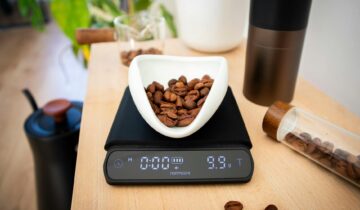
For the manual barista, the Anima’s dose adjustment offers convenience at the cost of precision. While you are controlling the dose, you are doing so in pre-defined steps rather than with the tenth-of-a-gram accuracy of a digital scale. The machine does not provide a precise weight, so the user must rely on taste and observation.
Think of the five bean settings as pre-set dose weights, perhaps ranging from approximately 7 grams to 11 grams (these values can vary). A manual barista achieves consistency by weighing the dose every time. The Anima achieves consistency through the timed grinding mechanism. While less exact, it provides a reliable framework for repeatable results once you have calibrated the setting to a specific coffee bean and your personal taste preference.
Conclusion
The Gaggia Anima’s aroma strength setting is, in essence, a dose control system. By adjusting the grinder’s run time, it determines the mass of coffee used to prepare the espresso. This adjustment directly influences the density of the coffee puck, the flow rate of water, and the overall extraction yield. For the experienced barista, mastering this setting is the key to unlocking the machine’s potential and moving from a default, one-size-fits-all output to a deliberately calibrated and superior cup of coffee. By treating this function as you would a dose adjustment in a manual process, you can apply your existing knowledge to achieve consistently better results. For those who also work with manual equipment, a range of precision tools can be found at papelespresso.com.

 No products in the cart.