

Why brew temperature drops during a shot and how mods fix it
For the dedicated manual espresso enthusiast, temperature stability is a cornerstone of shot consistency. While we often focus on the starting brew temperature, the thermal journey of water during the few seconds of extraction is far more complex. A significant drop in temperature as water travels from the boiler, through the grouphead, and into the coffee puck is a common and often overlooked variable. Understanding the physics behind this temperature drop is the first step toward managing it. For those chasing the highest levels of extraction quality, addressing this thermal instability can unlock greater clarity, sweetness, and consistency in the final cup. This article explores the causes of temperature decline during a shot and the practical modifications that help solve it.
The thermodynamics of an espresso shot
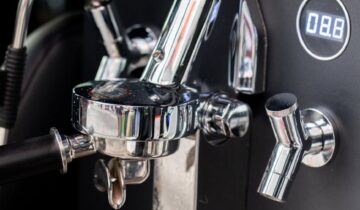
The journey from boiler to coffee puck is a battle against heat loss. Every component the water touches absorbs a portion of its thermal energy. The primary culprits are the grouphead, the portafilter, and the coffee grounds themselves. When you initiate a shot, the water leaves the boiler at a set temperature, but it immediately begins to cool upon contact with the metal components of the brew path. The grouphead, a large mass of brass or stainless steel, acts as a significant heat sink. If not adequately preheated, it can sap several degrees from the brew water instantly.
The portafilter and basket, also metal, contribute further to this thermal decline. Finally, the coffee puck itself—composed of room-temperature grounds—requires thermal energy to become fully saturated and begin extracting soluble compounds. This cumulative heat loss results in a temperature profile that often starts high and ends noticeably lower. An initial temperature of 94°C might drop to 90°C or even lower by the end of the extraction, fundamentally altering the conditions under which the coffee is brewed.
How temperature decline affects flavor
A declining temperature profile during extraction is not inherently negative, but an uncontrolled or excessive drop often leads to undesirable flavors. The solubility of coffee compounds is highly dependent on temperature. The brighter, more acidic flavor compounds are more soluble and extract early in the shot, while the deeper, sweeter, and more bitter compounds require more sustained thermal energy to dissolve.
When the brew temperature drops significantly, the extraction of those later-stage compounds is hindered. This can result in a shot that tastes imbalanced: bright and sour upfront but lacking the sweetness, body, and complexity that a stable temperature would provide. The shot may taste “hollow” or finish with a thin, astringent quality. For light roasts, where achieving a full, even extraction is already challenging, a steep temperature decline can make it nearly impossible to avoid sourness without also introducing bitterness from grinding too fine. Managing this thermal drop is key to unlocking a more complete and balanced flavor profile.
Modifications for improving thermal stability
Fortunately, the espresso machine community has developed numerous modifications to address temperature instability. These solutions range from simple workflow adjustments to sophisticated hardware additions. One of the most effective approaches involves insulating the boiler and grouphead to minimize passive heat loss. By wrapping these components in high-temperature insulation, the machine can maintain its target temperature more effectively, both at idle and during the shot.
Another common strategy is to improve the thermal mass and management of the grouphead. For some machines, this involves adding custom-made components that either increase the grouphead’s heat retention or incorporate electronic heating elements. PID (Proportional-Integral-Derivative) controllers are another popular modification. While a PID controller primarily regulates the boiler temperature with great precision, its ability to maintain a stable starting point reduces one of the major variables, allowing the barista to focus on managing the drop that occurs downstream.
Workflow techniques for temperature management
Beyond hardware modifications, refining your workflow can yield significant improvements in thermal stability. Thorough and consistent preheating is the most critical factor. This means allowing the machine, including the grouphead and the locked-in portafilter, to heat up for at least 30-45 minutes before pulling the first shot. This ensures all components are fully heat-saturated and will absorb less energy from the brew water.
A carefully executed flushing routine is also essential. For some machines, a short flush of water through the grouphead just before pulling the shot can help stabilize the temperature in the brew path. The goal is to bring all components to a known, repeatable temperature. However, the duration and necessity of a flush depend heavily on the machine’s design. Experimenting with a thermometer to measure the output water temperature can provide valuable data for developing a consistent and effective pre-shot routine.
Conclusion
The drop in brew temperature during an espresso shot is a fundamental challenge rooted in the laws of thermodynamics. The heat loss to the grouphead, portafilter, and coffee puck can lead to an uneven extraction and imbalanced flavor profile, often characterized by excessive acidity and a lack of depth. By understanding the causes of this thermal decline, baristas can take deliberate steps to mitigate it. Whether through hardware modifications like insulation and PID controllers or through meticulous workflow adjustments like thorough preheating and strategic flushing, achieving greater thermal stability is an attainable goal. The result is a more consistent, balanced, and expressive shot of espresso. For those looking to implement these changes, various tools and components are available from retailers like papelespresso.com.
 No products in the cart.