

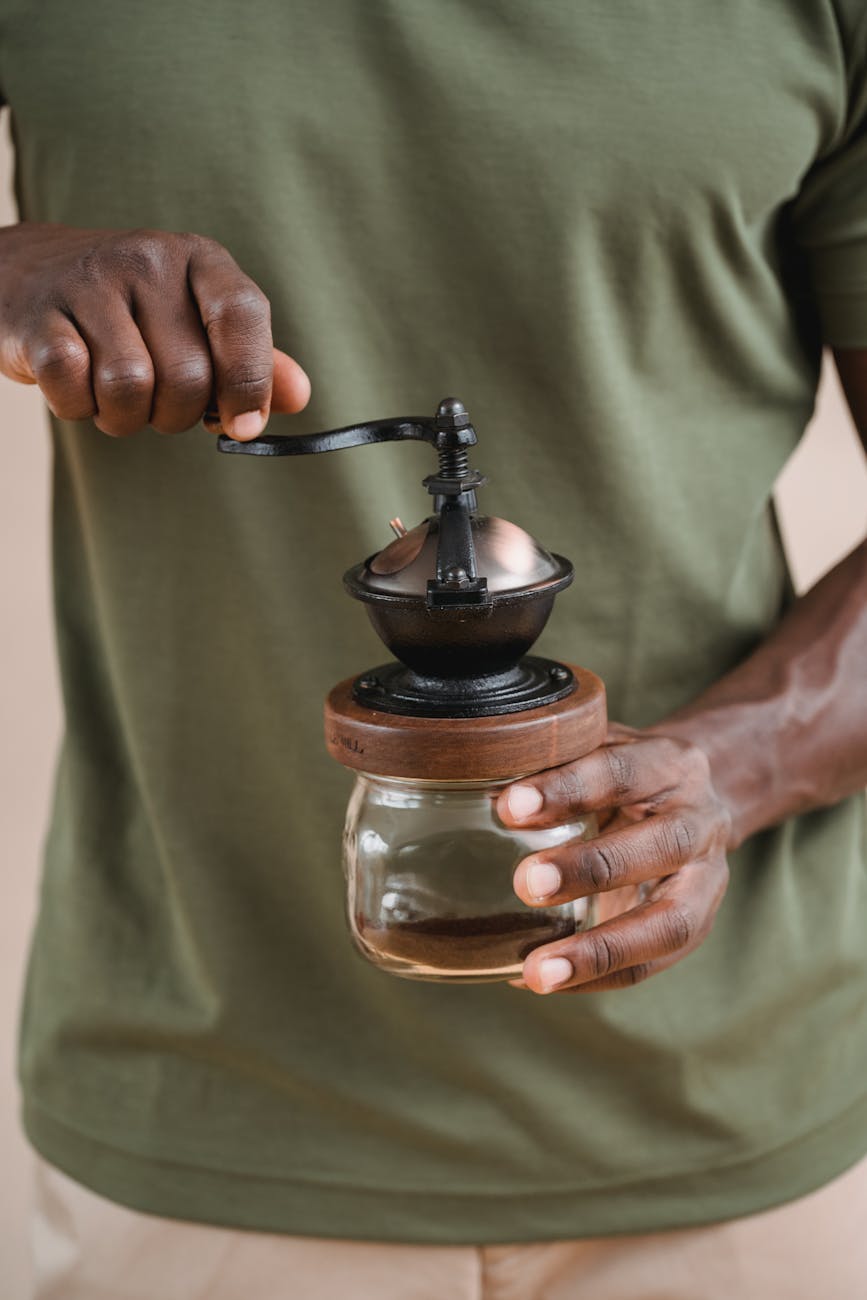
For many coffee enthusiasts, the espresso grinder is the heart of the home cafe. It’s a precision instrument, meticulously dialed in to produce that perfect, syrupy shot. The thought of adjusting it for a completely different brew method, like a delicate V60 pour-over, can be terrifying. Will you ever find that sweet spot again? The good news is that you don’t need two separate, expensive grinders. With a methodical approach and a little bit of care, you can easily switch between a fine espresso grind and a coarser V60 setting without losing your precious calibration. This guide will walk you through the techniques and workflows that allow your high-performance grinder to pull double duty, saving you time, counter space, and frustration.
Why it’s a challenge: The great grind divide
The core of the issue lies in the vast difference between the grind required for espresso and for V60. Espresso is an extraction method that uses high pressure to force hot water through a tightly packed bed of very fine coffee grounds in about 25 to 30 seconds. This requires a grind size that is almost like a fine powder, creating immense resistance. A tiny adjustment, often just a single “click” or a minuscule turn on a stepless grinder, can dramatically change the shot time and flavor.
In contrast, V60 is a pour-over percolation method. It relies on gravity to pull water through a much coarser bed of coffee. The grind should resemble the consistency of medium sand. This allows water to flow through at a controlled pace over 2 to 3 minutes, gently extracting flavor. Using an espresso grind in a V60 would instantly clog it, while using a V60 grind in an espresso machine would result in a gushing, under-extracted shot. Understanding this difference highlights why returning to the exact espresso setting is so critical.
| Brew method | Typical grind size | Visual description | Relative burr distance |
|---|---|---|---|
| Espresso | Fine | Table salt / fine powder | Very close |
| V60 (Pour-over) | Medium-coarse | Coarse sand | Far apart |
| French Press | Coarse | Breadcrumbs | Very far apart |
The meticulous count: Your key to consistency
The most reliable and universal method for switching between settings is what we can call the “count and return” technique. This requires you to be precise but is effective on almost any quality grinder, whether it is stepped (with distinct clicks) or stepless (with a smooth, infinite adjustment). The goal is to create a repeatable roadmap from your espresso setting to your V60 setting and back again.
Here is the step-by-step process:
- Establish your home base. First, ensure your grinder is perfectly dialed in for espresso. Make a clear note of this exact setting. Write it down if you need to. This is your zero point.
- Adjust while grinding. Never make large adjustments toward a finer setting without the motor running and beans going through. However, when moving from fine to coarse (espresso to V60), it’s generally safe to adjust with the motor off. To be safe, always run the motor when making a big jump.
- Count every step. As you turn the adjustment collar or dial toward a coarser setting, count every single click or numbered notch you pass. If your grinder is stepless, count the full rotations and note the final position of the dial (e.g., “2 full rotations plus to the number 7”).
- Reverse the process. When you’re ready to go back to espresso, simply reverse the exact number of clicks or rotations. If you went 45 clicks coarser, you must go 45 clicks finer. This precision is what ensures you land exactly where you started.
Using your grinder’s design to your advantage
While the counting method works for all grinders, some designs make the process much easier. Stepped grinders, which have a set number of adjustments that click into place, are often the simplest for this task because each setting is a fixed, repeatable position. You just need to remember the number for espresso and the number for V60.
Stepless grinders offer infinite control, which is fantastic for dialing in espresso but can make returning to a precise spot more challenging. This is where physical markers come in handy. Take a small piece of tape or a non-permanent marker and place a tiny dot on the adjustment collar and a corresponding dot on the stationary body of the grinder. This creates a visual “home” for your espresso setting. When you adjust for V60, you can see exactly how far you’ve turned from your mark, and when you return, you just have to line the two dots up again perfectly.
Mastering your workflow: Single dosing and purging
Your daily coffee routine also plays a significant role. This transition is far easier with a workflow built around single dosing, which means you weigh the exact amount of beans for each coffee you make and grind them all at once. Grinders designed for single dosing, like the Niche Zero or many from Fellow and Option-O, have very low grind retention, meaning very little coffee is left inside the burrs after grinding.
This is important because when you switch back from a coarse V60 setting to a fine espresso setting, some larger coffee fragments might be left in the grind chamber. If these get into your next espresso puck, they can create channels and ruin the shot. To prevent this, you must purge the grinder. After adjusting back to your espresso setting, grind a couple of grams of beans and discard them. This small sacrifice ensures that only grounds of the correct, fine consistency will make it into your portafilter, preserving the quality of your shot.
By integrating this small but crucial step into your workflow, you guarantee that your transition back to espresso is not just accurate in setting, but also in execution. You get a clean, consistent grind every time, regardless of what you brewed before.
Ultimately, using a single high-quality grinder for both espresso and V60 is not only possible but also practical. It simply requires a shift from casual adjustment to a more deliberate and mindful process. By understanding the fundamental differences in grind size, adopting a precise method like counting clicks or marking your position, and refining your workflow to include single dosing and purging, you can confidently switch between brew methods. You no longer have to fear losing that perfect espresso calibration you worked so hard to find. This approach empowers you to explore the full spectrum of coffee brewing, from intense espresso to nuanced pour-over, all with the same trusted machine. Happy brewing!
 No products in the cart.